

can you take creatine while fasting: When to take & why
Can you take creatine while fasting? The short answer is a definite yes. For almost any fasting protocol, pure creatine monohydrate won’t break your fast, making it a perfect partner for your routine.
It contains virtually no calories and doesn't trigger the insulin spike you’re working so hard to avoid.
The Definitive Answer on Mixing Creatine and Fasting
Creatine and intermittent fasting are two of the most effective tools women use to build strength and change their body composition. It's only natural to wonder if these two powerhouses can work together.
The good news? They're incredibly compatible. But understanding why is the key to getting real results.
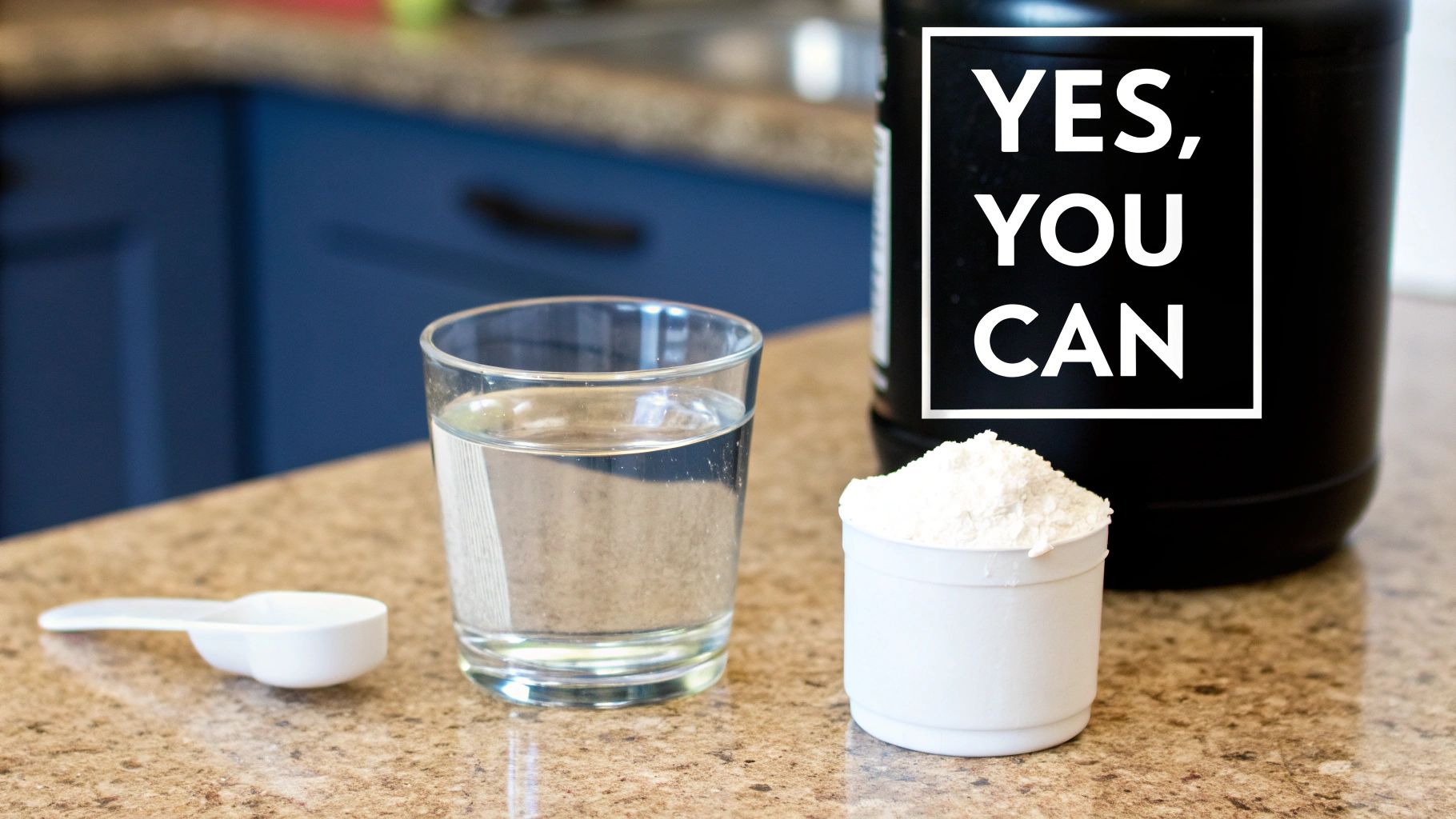
Think of creatine as a specialized fuel source just for your muscles. It works on a completely different system than the main energy pathways that fasting influences. Taking creatine during your fasting window won't disrupt the metabolic state you're trying to achieve.
Why It Works So Well Together
This combo has become a huge topic of interest as more and more people embrace fasting. With the global rise of intermittent fasting and religious fasts like Ramadan—practices observed by over a billion people—the science has had to catch up. Researchers are finally digging into how supplements like creatine fit into a fasted lifestyle. You can learn more about the specific research on creatine and fasting to see the data for yourself.
The reason they pair so well comes down to a few simple facts:
- No Caloric Impact: Pure creatine monohydrate is essentially calorie-free. It doesn't provide the energy that would signal your body to switch out of a fasted state.
- Minimal Insulin Response: When you take it with just water, creatine doesn't cause a meaningful insulin spike. Insulin is the main hormone that tells your body whether it's in a "fed" or "fasted" state.
- Keeps Your Muscles Fueled: Creatine tops off your muscles' energy reserves even when you aren't eating. This is huge for maintaining your strength and pushing hard during fasted workouts.
Before we get into the nitty-gritty science, here’s a quick rundown of what you need to know.
Creatine and Fasting At a Glance
This table breaks down the key factors at a glance, so you can see exactly why this combination works.
| Consideration | Impact on Fasting | Key Takeaway |
|---|---|---|
| Calorie Content | Negligible (virtually zero) | Doesn't provide enough energy to break a standard fast. |
| Insulin Response | Minimal to none when taken with water | Avoids the hormonal trigger that signals the end of a fasting period. |
| Workout Performance | Supports energy for high-intensity fasted training | Helps maintain strength and power even when your fuel tank is low. |
| Muscle Preservation | May help protect muscle tissue during a fast | Acts as a supportive agent against potential muscle breakdown. |
Essentially, creatine gives your muscles what they need to perform without telling the rest of your body that your fast is over. It's the best of both worlds.
How Creatine and Fasting Fuel Your Body Differently
To really get why creatine works so well with fasting, you have to understand that they're doing completely different jobs inside your body. Think of them as two specialists working on separate floors of the same building—they don't interfere with each other because they're focused on totally different tasks.
One is a performance specialist for your muscles. The other is a systems manager for your metabolism.
Creatine: Your Muscles’ High-Speed Charger
Imagine your muscles are like a smartphone. Just existing drains the battery a little, but a tough workout—like heavy squats or sprints—is like running ten power-hungry apps at once. The battery dies fast. Creatine is the emergency power bank that snaps on and recharges your muscles instantly.
On a science level, creatine helps your body rapidly remake adenosine triphosphate (ATP), which is the high-octane fuel for every explosive movement you make. Your muscles burn through their ATP stores in just a few seconds of intense effort. Creatine jumps in to replenish that supply so you can push out those extra few reps or lift a little heavier.
It’s all about immediate power. Creatine gives your muscles the on-demand energy they need to perform at their peak, right when it counts.
This direct-to-muscle fuel line is exactly why it’s a non-negotiable for anyone serious about building strength. To see the full picture, check out our guide on what creatine does for your body. It’s this quick-charge ability that makes all the difference in your training.
Fasting: Your Metabolic Reset Button
Fasting, on the other hand, isn't about muscle performance—it’s about managing your body's overall energy system. The whole point of most fasts is to keep your insulin levels low. When insulin is high (like after a meal), it tells your body to store energy. When it's low, your body gets the signal to start burning its stored fuel.
This metabolic switch is the key to unlocking the benefits of fasting, from burning more fat to cleaning up old, damaged cells. "Breaking your fast" just means you've eaten or drunk something that spikes your insulin enough to flip that switch back to "storage mode."
So, the real question is: does creatine flip that switch?
Nope. Creatine goes straight to your muscles to provide energy without needing a big insulin response. It flies completely under the radar of your body’s main fasting signals. It fuels your workout without telling your metabolism that the fast is over, making it the perfect partner for your training.
The Science of Why Creatine Does Not Break a Fast
So, the big question is, "can you take creatine while fasting?" and will it ruin all your hard work? The short answer is no. The reason lies in how your body actually uses creatine, which is almost completely separate from the metabolic pathways that fasting targets.
To put it simply, creatine just doesn't have the biological triggers that tell your body to stop fasting. Think of it like adding high-performance oil to your car's engine—it improves how things run without you having to stop for gas. Creatine gets straight to work in your muscles, bypassing the signals that break a fast.
Creatine Has a Negligible Caloric Impact
First things first: calories. Fasting is all about restricting caloric energy to kickstart certain metabolic states. Good news—pure creatine monohydrate is pretty much calorie-free.
A standard 5-gram scoop has such a tiny amount of energy that your body doesn't even register it as food. This is key, since a big hit of calories is the quickest way to break your fast. With creatine, that's just not a concern.
The Critical Factor: No Insulin Spike
This is the most important reason creatine gets a green light during a fast. It all comes down to its impact—or lack thereof—on insulin. Insulin is basically the hormonal gatekeeper of your fast. When you eat carbs or a lot of protein, insulin levels shoot up, telling your body it's in a "fed" or storage mode.
Pure creatine monohydrate, taken with just water, doesn't do this. It won't cause an insulin spike. Research shows it has no meaningful effect on blood sugar or insulin levels when you take it on its own. It flies completely under the radar of the hormones that regulate your fast. You can dig deeper into the science behind creatine and fasting to understand how it keeps your fasted state intact.
By avoiding an insulin response, creatine lets your body stay in that fat-burning, cell-repairing fasted state—all while sending performance benefits straight to your muscles.
Effective vs. Optimal Absorption
Now, you might have heard that taking creatine with carbs is "better" because insulin helps push it into your muscles faster. This is where people get confused. That's true for optimal absorption, but it’s not required for effective absorption.
Let's break down the difference:
- Optimal Absorption: Taking creatine with a meal (carbs and protein) can boost the speed and amount of creatine your muscles soak up by about 20-25%. That's great if you're eating anyway.
- Effective Absorption: Taking creatine with only water still works. Your muscles will absolutely absorb it, just a little more slowly. Over time, you'll still saturate your muscles and get 100% of the performance benefits.
You don't lose out on creatine's power by taking it fasted. Your body is more than capable of absorbing and using it to power your workouts, giving you the strength and endurance you're after without messing up your fast.
Strategic Benefits of Combining Creatine and Fasting
Knowing you can take creatine while fasting is one thing. Understanding why it's actually a smart move is where the real advantage comes in.
This isn't just about compatibility. When you pair creatine with fasting, you get a powerful combination that protects your hard-earned muscle and keeps your performance from dipping—even when your food intake is zero.

Think of creatine as your secret weapon during a fast. It helps you get the most out of your training and protect the physique you've worked so hard for.
Shielding Your Muscles from Breakdown
Let's be honest: one of the biggest worries with fasted training is muscle catabolism. That's the technical term for your body breaking down precious muscle tissue for fuel.
Creatine steps in to stop this. It gives your muscles a quick, non-glucose energy source to pull from.
This means your body doesn't need to raid your muscles for energy, letting you preserve lean mass while you burn fat. If you’re trying to fine-tune your body composition with fasting, understanding the specific benefits of creatine for fat loss can help dial in your strategy.
Maintaining Strength and Power
It's completely normal to feel a little less powerful when you're training on an empty stomach. Creatine directly fights that feeling.
By keeping your muscle cells saturated with fuel for explosive movements, it ensures you can still lift heavy and push hard.
Think of it as a reserve power generator for your muscles. Even when your main energy lines are down from fasting, creatine keeps the lights on for your toughest sets—like heavy squats or sprints.
This lets you maintain the quality and intensity of your workouts, which is the only way you’ll keep making progress.
Supporting Energy and Brain Fog
For a lot of women, fasting can bring on some serious mental fatigue, or "brain fog." Creatine isn’t just for your biceps; it's also a critical fuel source for your brain.
By supporting ATP levels in your brain, creatine can help sharpen your focus and keep you feeling clear-headed, even deep into a fast.
And the research backs this up. Studies consistently show creatine supports performance, regardless of when you eat. One randomized controlled trial found that just 5 grams of creatine daily led to a 4.5% improvement in mean power during sprints—even when the athletes were fasted.
By combining creatine and fasting, you're not just avoiding a problem. You're creating a powerful synergy. Creatine helps cancel out the potential downsides of fasting—like muscle loss and weak workouts—while you reap all the metabolic rewards. It’s a smart, strategic way to get better results.
A Practical Guide to Timing and Dosing Creatine
Okay, so we’ve established that taking creatine while fasting is safe and won't mess up your results. Now for the real question: how do you actually fit it into your routine without overcomplicating things?
It’s way simpler than you think. No crazy schedules or massive doses needed.

The single most important thing is consistency. Your goal is to keep your muscles topped off with creatine, and a steady daily dose gets you there.
Finding Your Perfect Timing
There are two easy ways to time your creatine, and both work perfectly with fasting. The right one for you just comes down to your workout schedule and what feels best.
-
Take It During Your Eating Window: This is a great, simple option. Mixing your creatine in with your first meal of the day is perfect. The carbs and protein in your food can even give its absorption a little boost. Some studies suggest that taking creatine with protein and carbs can jack up muscle uptake by as much as 60% compared to taking it on its own. You can find more details on creatine absorption at protealpes.com.
-
Take It Before a Fasted Workout: If you’re someone who trains on an empty stomach, this is your move. Taking your creatine 30-60 minutes before you start gives your muscles that quick-fire energy source right when they need it most—perfect for pushing through those tough last reps.
At the end of the day, just take it every single day. Whether you take it before your workout or with a meal, what matters is that you don’t skip it. If you want to dive deeper, our guide on the best time to take creatine for muscle growth has even more strategies to line up with your specific goals.
The Simple Dosing Strategy
Forget everything you’ve read about a complicated "loading phase." You know, the advice that tells you to take 20 grams a day for a week? While it works to saturate your muscles faster, it’s usually overkill. Plus, it’s notorious for causing stomach issues, especially when you don't have food to act as a buffer.
There’s a much easier—and gentler—way that’s just as effective in the long run.
The Recommendation: Stick to a simple, consistent maintenance dose of 3-5 grams of unflavored creatine monohydrate every day. That’s all you need. Within a few weeks, your muscles will be fully saturated, and you can keep them that way for maximum benefits.
This steady approach helps you sidestep side effects like bloating or stomach cramps. Nobody wants to deal with that, especially during a fast.
A Quick Tip for Women on Hydration
One of the biggest worries women have about creatine is water retention. Here's the deal: creatine works by pulling water into your muscle cells. That’s actually a good thing! It’s part of how it boosts performance.
But it also means you need to stay on top of your water intake. Make sure you’re drinking plenty of water throughout the day, both in your fasting and eating windows. This not only helps your body use creatine the right way but also keeps any temporary bloating at bay, so you can feel lean, strong, and confident.
What to Expect and How to Use Creatine Safely
When you start taking creatine, especially while fasting, it’s smart to know what’s coming and how to keep the process smooth. Like any truly effective supplement, it has a few potential side effects—but don't worry, they are almost always mild and easy to manage.
The most common things people notice are a bit of bloating, water retention, or minor digestive upset. This usually only happens if you start with too high a dose or, more often, just don't drink enough water. Creatine literally works by pulling water into your muscle cells, which is exactly what you want. So, staying seriously hydrated is non-negotiable.
Sticking to a consistent daily dose of 3-5 grams is the best way to sidestep any stomach weirdness, which can feel more noticeable when your stomach is empty during a fast.
Special Considerations for Women
For women, the conversation around creatine is still stuck on outdated myths about getting "bulky." Let's just get this out of the way: creatine will not make you bulky. It’s not a steroid. It simply helps you build lean, toned muscle that creates a strong, sculpted physique—not massive, bodybuilder-style size.
The one thing to be mindful of is how your own monthly cycle already affects water retention. It’s completely normal to feel a bit more bloated at certain times of the month. Adding creatine to the mix might slightly amplify that feeling, but it’s always temporary and totally manageable.
The key here is to understand that this is intracellular water (good water, inside the muscle), not the subcutaneous water that gives you a "puffy" look. It’s actually a sign that the supplement is doing its job hydrating and fueling your muscles.
By drinking plenty of water and sticking to that low, consistent dose, you can easily navigate this. If you want to dive deeper, you can learn more about the specific creatine side effects women should know about so you can supplement with total confidence.
Creatine & Fasting: Your Questions Answered
Still have a few questions? Let's clear them up. This is your quick guide to combining creatine and fasting with total confidence.
Will Taking Creatine With Coffee or Tea Break My Fast?
Nope. Taking unflavored creatine with black coffee or plain tea is perfectly fine and won’t kick you out of a fasted state.
Just a heads-up: some women find that mixing creatine with acidic coffee on an empty stomach can cause a bit of digestive upset. Pay attention to how your body feels and adjust if you need to.
What’s the Best Type of Creatine to Take When Fasting?
Stick with the classic: creatine monohydrate. It’s the most studied, most effective, and easiest on your wallet.
The most important thing here is to choose an unflavored version. Flavored options are almost always packed with sweeteners, sugars, or other additives that will definitely spike your insulin and break your fast. Pure, unflavored creatine monohydrate is the only way to go.
Should I Do a Loading Phase While Fasting?
We don’t recommend it. A loading phase (taking around 20 grams a day) is designed to saturate your muscles faster, but it also comes with a higher risk of stomach issues. That risk is even greater when you’re taking it without any food to act as a buffer.
It’s just not necessary. A consistent daily dose of 3-5 grams will get you the exact same results over a few weeks, and it’s much gentler on your system. Slow and steady wins the race here.
Ready to build a stronger, more toned physique with a clean formula designed for women? Bold Buns offers premium, pure creatine monohydrate to fuel your workouts and help you achieve your goals, whether you're fasting or not. Start sculpting your dream body with Bold Buns today!