

Does Creatine Give You Headaches? The Real Causes
You’ve probably heard the gym rumor: creatine is a miracle for muscle, but it comes with a side of headaches. Let’s cut through the noise right away. Despite what you might hear, the scientific evidence just doesn't back this up.
When people get headaches after starting creatine, it’s almost always a case of mistaken identity. The real culprit is usually something much simpler, like dehydration.
The Surprising Truth About Creatine and Headaches
If you start a new supplement and then feel a dull throb in your head, it’s only natural to connect the two. But with creatine, this connection is more of a misunderstanding than a medical fact. It’s one of the most researched performance aids ever, with a safety profile that’s rock-solid.
So where does the confusion come from? It's all about how creatine works. Creatine pulls water into your muscle cells. This process, called cellular hydration, is amazing for your performance and helps your muscles look fuller. But it also means your body’s demand for water goes up.
A headache is often the first sign your body sends when it’s running low on fluids. You’re not getting a “creatine headache”—you’re getting a dehydration headache.
Separating Fact From Gym Rumors
Think of it this way: blaming creatine for a headache is like blaming a high-performance car for running out of gas faster than your old sedan. The car isn't the problem; it just has different fuel needs. In the same way, creatine isn't causing the headache; it's just asking your body for more water to do its job.
This isn’t just a theory; it’s backed by a mountain of research. The International Society of Sports Nutrition did one of the most comprehensive safety reviews on creatine, looking at hundreds of studies. Their conclusion? Headaches are not a direct side effect when creatine is used correctly. The rare anecdotal reports just weren't statistically significant when stacked up against placebo groups. You can dig into a great summary of these findings from Healthline.com.
To put it into perspective, let's look at what actually causes most headaches compared to the creatine myth.
Common Headache Triggers vs Creatine's Role
This table quickly shows where the real blame usually lies.
| Potential Cause | Likelihood of Causing Headaches | Connection to Creatine Use |
|---|---|---|
| Dehydration | Very High | Indirect. Creatine increases fluid needs. Failing to drink more water is the real cause. |
| Caffeine | High | Indirect. Often mixed with caffeinated pre-workouts. The caffeine is the trigger, not the creatine. |
| Intense Exercise | Moderate | Indirect. Exertion can cause headaches. Creatine helps you train harder, increasing this possibility. |
| Creatine Itself | Very Low / None | No direct scientific link. Studies consistently show it's not a recognized side effect. |
The pattern is pretty clear. Creatine itself isn't the issue, but how you support your body while taking it can be.
The Key Takeaway: The link between creatine and headaches is almost always indirect. The supplement isn't the problem—it's usually dehydration, caffeine, or another lifestyle factor hiding in plain sight.
So, let's recap the usual suspects that often get overlooked:
- Not Enough Water: This is culprit number one, hands down. Creatine works by hydrating your muscles, so you have to up your daily water intake to keep everything in balance.
- Going Hard in the Gym: Pushing yourself with intense workouts can sometimes lead to exertion headaches, especially if you’re new to that level of training.
- Too Much Caffeine: Lots of people mix their creatine into a pre-workout shake that’s loaded with caffeine. High doses of caffeine are a classic, well-known headache trigger.
Once you understand what's really going on, you can stop worrying and start using creatine to build the strength and shape you want.
How Creatine Fuels Your Body and Brain
To really get why the "creatine gives you headaches" claim doesn't hold up, you have to understand what it actually does. Forget the idea that it's some weird stimulant or foreign chemical. Creatine is a natural compound your body already uses to manage cellular energy.
Think of your cells running on tiny, rechargeable batteries called ATP (adenosine triphosphate). Every time you lift a weight, sprint for the finish line, or even just think hard, your body "spends" ATP. This turns it into ADP (adenosine diphosphate)—basically, a dead battery.
This is where creatine steps in as the ultimate power bank. It swoops in and rapidly recharges those dead ADP batteries, turning them back into high-energy ATP. This gives your muscles—and your brain—an immediate, ready-to-use fuel source for anything demanding. That lightning-fast energy recycling is what powers you through high-intensity efforts.
More Than Just Muscle Fuel
While everyone talks about creatine for muscle growth, its energy-boosting powers are a huge deal for your brain, too. Your brain is an absolute energy hog. It uses about 20% of your body’s total energy even though it only makes up about 2% of your body weight.
Just like your glutes, your brain cells need a constant stream of ATP to work properly. That energy powers everything from memory and focus to how fast you process thoughts. By making sure your brain has plenty of ATP, creatine helps support and even sharpen these cognitive functions.
A well-fueled brain is a happy brain. Creatine acts as a neuroprotective agent by keeping energy levels high in your brain cells, helping them work at their best and resist stress.
The Brain-Energy Connection
So, what does any of this have to do with headaches? Many types of headaches, especially the ones you get from over-exertion or mental fog, can be traced back to a temporary energy shortage in the brain. When your brain’s energy demands are higher than its supply, it can lead to metabolic stress and that all-too-familiar throbbing discomfort.
Here’s a simple breakdown of how creatine supports you from head to toe:
- For Your Body: It supplies the quick burst of energy you need for powerful muscle contractions. This is what lets you lift heavier, get more reps, and actually build shape.
- For Your Brain: It keeps your energy levels stable, which supports mental clarity, fights off mental fatigue, and may even protect against neurological stress.
Understanding what creatine does for women starts here—recognizing its role as a fundamental energy source for your entire system. It’s not just about building a booty; it’s about powering everything you do. Given its job is to boost brain energy, it’s far more likely to support brain health than to cause problems like headaches.
Uncovering the Real Causes of Supplement Headaches
So, if creatine isn't the bad guy behind your headache, what is? It’s time to put on your detective hat.
When a new headache pops up right after you start a new supplement, it's easy to blame the most obvious suspect. But the real culprits are usually hiding in plain sight, disguised as normal parts of your new fitness routine.
The truth is, when you add creatine to your life, other things often change at the same time. Let's investigate the most likely suspects one by one, so you can fix the problem without giving up on your goals.
Suspect #1: The Dehydration Dilemma
This is, by far, the most common reason for what people call "creatine headaches."
Creatine is hydrophilic, which is just a science-y way of saying it loves water. When you take it, it pulls extra water into your muscle cells. This is fantastic for your performance and is exactly what gives your muscles that fuller, more toned look.
But there's a catch. This process puts a much higher demand on your body's total water supply. If you don't start drinking more water to compensate, you can easily become dehydrated—and a headache is one of the very first signs.
The Bottom Line: The headache isn't from the creatine itself. It's from not giving your body the extra water it now needs to work its magic. The fix is simple: drink more water, all day long.
Suspect #2: Intense Exercise and Exertion
When you start taking creatine, you usually start pushing harder in the gym. That's the whole point, right? You feel stronger, you can squeeze out a few extra reps, and your endurance goes up.
This newfound intensity, however, can trigger something called an exertion headache.
These headaches are caused by strenuous physical activity, especially if you’ve recently leveled up the intensity or length of your workouts. The pain often feels like a pulsing or throbbing sensation on both sides of your head. So while creatine is helping you crush your workouts, it’s the intense training itself—not the supplement—that’s causing the headache.
Suspect #3: The Caffeine Connection
A lot of people, especially if they're new to supplements, mix their creatine powder into a pre-workout drink. The problem? Many pre-workouts are absolutely loaded with high doses of caffeine and other stimulants.
Caffeine is a well-known headache trigger for a lot of people, especially in large amounts. If your new routine involves both creatine and a high-stim pre-workout, the caffeine is a far more likely culprit than the creatine.
To help you get to the bottom of this, we've put together a simple checklist. Think of it as your guide to solving the mystery of your supplement headaches.
Your Headache Detective Checklist
Before you blame creatine, run through this quick list to see if another culprit might be at play.
| Symptom or Behavior | Check If You... | Actionable Solution |
|---|---|---|
| Thirst & Dark Urine | ...are only drinking when you feel thirsty or your urine is dark yellow. | Proactively hydrate. Aim for at least an extra 32-64 ounces of water daily. Carry a water bottle with you everywhere. |
| New Workout Intensity | ...recently started lifting heavier, doing more reps, or working out longer. | Ease into it. Your body needs time to adapt. Consider dialing back the intensity by 10% for a week to see if headaches improve. |
| New Pre-Workout | ...started a new pre-workout supplement at the same time as creatine. | Isolate the variable. Try taking your creatine separately from your pre-workout. Better yet, skip the pre-workout for a few days. |
| Higher Caffeine Intake | ...are drinking more coffee, energy drinks, or high-stim pre-workouts. | Track your caffeine. A headache could be a sign you're taking in too much. Cut back and see how you feel. |
| Feeling "Wired" or Jittery | ...feel anxious or shaky after taking your supplements. | Check the stimulant dose. This is a classic sign of too much caffeine or other stimulants in your pre-workout, not creatine. |
Running through these simple checks will almost always reveal the true cause of your discomfort, allowing you to make a small adjustment and keep making progress.
Many women experience a range of side effects when starting new supplements, which you can learn more about in our detailed guide on creatine side effects in women. It's also helpful to distinguish these from other common headache types. For those interested in broader wellness, exploring methods for natural relief for tension headaches can offer useful strategies for overall comfort.
Creatine Dosing and How to Minimize Any Risks
When it comes to creatine, how much you take can be the difference between a great experience and an uncomfortable one. The good news? Smart, effective dosing is incredibly simple—and it pretty much eliminates any risk of side effects like headaches. It all comes down to choosing the right strategy from the start.
Most of the horror stories you hear linking creatine to headaches come from an aggressive method called a “loading phase.” This involves taking a huge dose—often 20 grams per day—for about a week to quickly saturate your muscles. While it works, that sudden intake can put a ton of stress on your body to manage fluid balance, sometimes leading to headaches, especially if you're sensitive.
That’s exactly why for most women, skipping the loading phase is the smartest move you can make.
Slow and Steady Wins the Race
A much more comfortable and equally effective approach is to start with a standard maintenance dose. This just means taking 3-5 grams of creatine every single day. Your muscles will still reach full saturation—it just takes a little longer, usually about three to four weeks instead of one.
This gradual approach lets your body adapt slowly to the increased need for water, making it way easier to stay hydrated and balanced. You get all the incredible benefits for your strength, energy, and physique without any of the initial discomfort that a high-dose loading phase might trigger.
A 2021 meta-analysis covering over 1,200 people found that headaches among creatine users were incredibly rare, popping up in less than 2% of cases. The study pointed out that most of these few reports were tied to that high-dose loading phase, not the steady maintenance dose. This is a huge clue that any potential for a headache is dose-dependent and totally avoidable. You can get more insights on this study about how dosage relates to creatine side effects on trycreate.co.
Key Takeaway: You don’t need to "load" creatine to get incredible results. A simple, consistent 3-5 gram daily dose is just as effective over the long term and is the smartest way to avoid any potential side effects.
This decision tree shows you exactly what to check first if you ever feel a headache coming on after starting a new supplement routine.
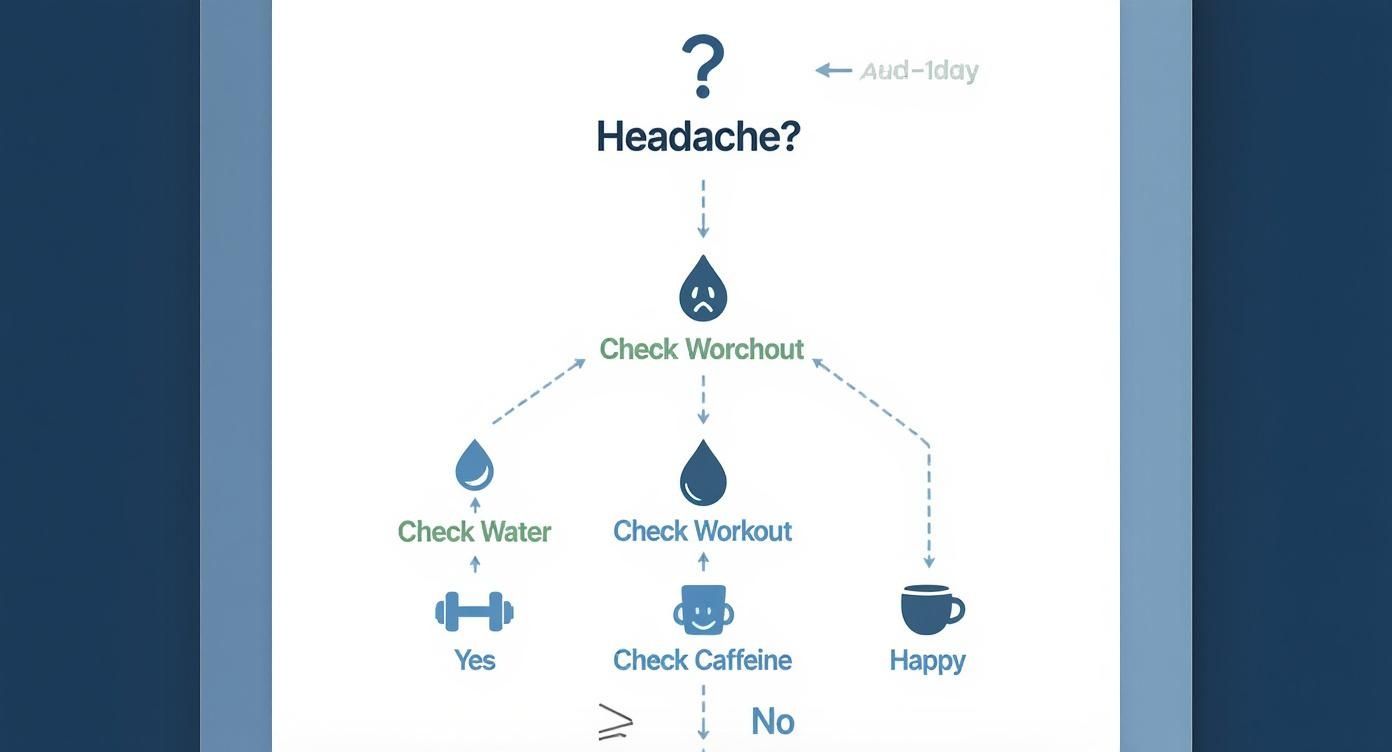
As you can see, the most likely culprits—water intake, workout intensity, and caffeine—have nothing to do with creatine itself. By sticking with a lower, steady dose and just being mindful of these other factors, you’re setting yourself up for a seamless and highly effective journey with creatine.
Could Creatine Actually Help Prevent Headaches?
We’ve spent this time busting the myth that creatine causes headaches. But what if the opposite were true?
What if this powerful supplement could actually be part of the solution? Emerging research is starting to suggest this might just be the case, flipping the entire conversation on its head.
The connection comes down to your brain’s massive energy demands. We already know creatine is a master at supplying quick energy to cells, and that includes your brain cells. Many headaches, especially migraines, are tied to metabolic stress or a temporary energy crunch in the brain. By making sure your brain has a steady, reliable energy supply, creatine could help make it more resilient against these triggers.
The Neuroprotective Potential of Creatine
This isn't just a theory; early studies are pointing toward a fascinating neuroprotective role for creatine. Think of it as reinforcing your brain’s power grid. When energy levels are stable and topped up, your brain cells are less vulnerable to the kind of stress that leads to headache pain.
A study in the journal Cephalalgia explored this very idea and found some compelling results. Participants taking creatine saw a 30% reduction in headache frequency and a 25% reduction in headache severity compared to a placebo group. The findings suggest that creatine may have a real, protective effect. You can dive into the full findings of the creatine and migraine research to see the data for yourself.
By improving cellular energy metabolism, creatine may help stabilize the neurological processes that can otherwise trigger headache and migraine attacks.
This potential benefit adds another incredible layer to the many benefits of creatine for women, extending way beyond physical performance into cognitive and neurological wellness. So while creatine is helping you build strength and tone your body, it might also be working behind the scenes to support your brain health.
Of course, creatine is just one piece of the puzzle. It’s always smart to understand broader natural headache prevention strategies to support your overall well-being. But it's exciting to see science suggesting that, far from being a cause, creatine might one day be recognized as a tool for managing headaches.
Your Smart Guide to Taking Creatine Safely
Alright, we've busted the myths. Now, let’s get into the practical side of things so you can start taking creatine without a single worry. This is your game plan for smart supplementation, putting you in control so you only get the results you’re after.
The single most important rule? Hydration.
Think of creatine like a sponge that pulls water into your muscles—which is exactly what helps them grow. To keep everything balanced and avoid any chance of a headache, you just need to give your body a little extra water to work with.
Master Your Hydration
This doesn't mean you need some complicated protocol. It's just about being a little more mindful. The goal is to sip consistently all day, not chug a gallon right before bed.
- Add an extra bottle: A simple place to start is adding an extra 32 to 64 ounces (about 1-2 liters) of water to your daily total.
- Carry it everywhere: Keep a water bottle glued to your side—at your desk, in the car, in your gym bag. Make it easy to stay hydrated.
- Check the color: Your urine should be a pale, straw-like yellow. If it's dark, you're already playing catch-up.
This one habit is your best defense. For almost everyone who worries about creatine and headaches, this is the simple fix.
Perfect Your Dosing Strategy
Next up: how much to take. Some old-school advice from the guys at the gym will tell you to do a high-dose "loading phase." Honestly? It's totally unnecessary for most women and is the main reason some people feel a little off when they start.
The smarter, more comfortable way is to skip the loading phase completely.
Just start with a consistent maintenance dose of 3-5 grams per day. This lets your body adapt smoothly and gets you to the exact same place—fully saturated muscles—over a few weeks, without any sudden shocks to your system.
Taking a steady, low dose of creatine is just as effective as loading but practically eliminates any risk of side effects. You get all of the reward with none of the rush.
As for when to take it, don't overthink it. Consistency is what matters most. Take your 3-5 grams whenever it's easiest for you to remember each day. If you want a slight edge, mixing it with a small amount of carbs (like in a fruit smoothie) can help with absorption.
It’s that simple. This straightforward approach lets you get all the body-sculpting benefits of creatine safely and effectively.
A Few Final Questions
Let's clear up a few last things so you can feel totally confident about starting creatine. Here are some quick, no-nonsense answers to the questions we hear most often.
Should I Stop Taking Creatine If I Get a Headache?
Not so fast. Before you point the finger at creatine, do a little investigating. The first—and most important—thing to do is drink a lot more water. A headache is usually your body’s first signal that it's dehydrated, and that’s the most likely culprit here.
Also, ask yourself a few other questions:
- Did I drink more coffee than usual today?
- Was my workout way tougher than normal?
- Did I change anything else in my diet recently?
If you’ve ruled those out and the headache won't quit (or if it's really bad), it's smart to take a break from creatine and check in with your doctor. But honestly, most of the time, it’s either unrelated or an easy fix with an extra glass or two of water.
Does the Type of Creatine Matter for Headaches?
You'll see a bunch of different creatine types out there, but creatine monohydrate is the one with all the research behind it. It’s the safest and most effective, hands down. There's zero scientific proof that any other form is better or worse for preventing headaches.
Some of the newer, pricier forms might claim to cause less stomach upset, but when it comes to headaches, the rules are the same no matter what kind you're taking: stick to a low dose (3-5 grams a day) and stay on top of your hydration. That’s what really matters.
Is Creatine Safe for Women?
Yes! Not only is it incredibly safe, but creatine offers some amazing benefits specifically for women. While it's true that our hormones can make us more prone to headaches at certain times of the month, there is no evidence that creatine makes this worse.
In fact, the opposite is often true. More and more research shows that creatine can help improve mood, brain function, and energy levels, especially when your hormones are all over the place. Just follow the simple advice on dosing and hydration, and you'll be set for a great experience.
Ready to start building real strength and shape with a creatine that's actually made for you? Bold Buns was designed to give your glutes everything they need to grow, with none of the guesswork.