

how to recover from leg day: fast recovery tips
You know that feeling right after your last rep on leg day? It’s a mix of pure victory and a little bit of dread for what’s coming tomorrow. While collapsing on the couch sounds amazing, what you do in the first 60 minutes is the difference between manageable soreness and the kind of pain that makes walking down stairs a serious challenge.
This isn’t about trying to erase all the soreness—that feeling is a good sign your muscles are adapting and growing stronger. This is about being smart and kickstarting the repair process immediately to get a handle on it.
Recovery isn't something that just happens to you. It's an intentional strategy. What you do in this first hour sets the stage for how you'll feel and perform for the next 48 hours.
Your Immediate Leg Day Recovery Playbook
Think of this as your rapid-response plan for your muscles. The goal is simple: calm your nervous system, flush out all the metabolic junk your body produced during the workout, and start the repair process on the right foot.
The most important actions happen right away. To make it simple, here’s a quick checklist to follow within that first hour to jumpstart your recovery.
The First 60 Minutes: Your Post-Leg Day Checklist
Follow these critical actions within the first hour after your workout to significantly jumpstart the recovery process.
| Action | Why It Matters | Pro Tip |
|---|---|---|
| 5-10 Min Cooldown | Gradually lowers your heart rate and prevents blood from pooling in your legs, which helps clear out metabolic waste faster. | A slow walk on the treadmill or a light spin on a stationary bike is perfect. Don't just stop cold. |
| Hydrate with Water & Electrolytes | You lose essential minerals through sweat. Replenishing them immediately helps prevent muscle cramps and supports muscle function. | Keep a water bottle with an electrolyte tab or powder ready to go in your gym bag. Sip, don't chug. |
| Gentle Static Stretching | Releases tension in tight muscles, particularly the glutes, hamstrings, and quads. This can improve flexibility and reduce that "locked up" feeling. | Hold each stretch for 20-30 seconds. No bouncing—just a gentle, sustained pull. |
| Consider Heat Exposure | Using a sauna can boost circulation, which delivers more oxygen and nutrients to your tired muscles and helps soothe soreness. | Even 5-10 minutes in the sauna can make a huge difference. Don't overdo it, and keep hydrating. |
These steps are non-negotiable if you’re serious about seeing results without feeling completely wrecked for days.
Why You Shouldn't Skip The Cooldown
Never, ever just stop cold after your last set. Your body needs to transition from high intensity back to a state of rest. A proper cooldown helps your heart rate come down gradually and gets your circulatory system back to business as usual.
Gentle, low-intensity movement right after a tough workout—sometimes called active recovery—is way more effective than just sitting still. It helps your body clear out the metabolic byproducts that contribute to that deep muscle ache.
Stretching and Soothing Your Muscles
Once your heart rate is down, it's time to give those hard-working muscles some love. A few minutes of static stretching for your major leg groups—quads, hamstrings, glutes, and calves—will help release that immediate post-workout tension. Remember to hold each stretch for 20-30 seconds without any bouncing.
And don't forget to rehydrate. You need to replace the water and electrolytes you lost sweating it out. For a recovery hack that a lot of people overlook, check out the benefits of using a sauna after your workout. That warmth feels amazing, but it's also a powerhouse for boosting circulation and soothing exhausted muscles.
Mastering Mobility and Foam Rolling
After you’ve crushed that last set of squats, your muscles are screaming. They’re tight, flooded with metabolic waste, and basically stuck in “work mode.” This is exactly where a smart mobility and foam rolling routine becomes your best friend for a faster, less painful recovery.
Just rolling around aimlessly won’t cut it, though. You need a targeted plan to tell your body it's time to switch over to "repair mode." The real goal here is to boost blood flow, break up those tiny knots in your muscle tissue, and get your full range of motion back. Think of it as giving yourself a deep tissue massage to release all that tension and kickstart the healing.
Your Targeted Rolling Sequence
Instead of random rolling, let’s get intentional. Spend about 30-60 seconds on each of the big muscle groups you just hammered.
- Quads: Lie face down with the foam roller under your thighs. Roll slowly from the bottom of your hip to just above your knee. When you hit a spot that makes you wince, pause on it for 20-30 seconds and just breathe through it.
- Hamstrings: Sit down with the roller under your hamstrings. Plant your hands behind you to lift your hips, and roll from right below your glutes to the back of your knees.
- Glutes: Sit right on the roller and cross one ankle over the opposite knee, like a figure-four stretch. Gently lean into the side of the crossed leg to really dig into your glute and piriformis muscles. Trust me, you'll feel it.
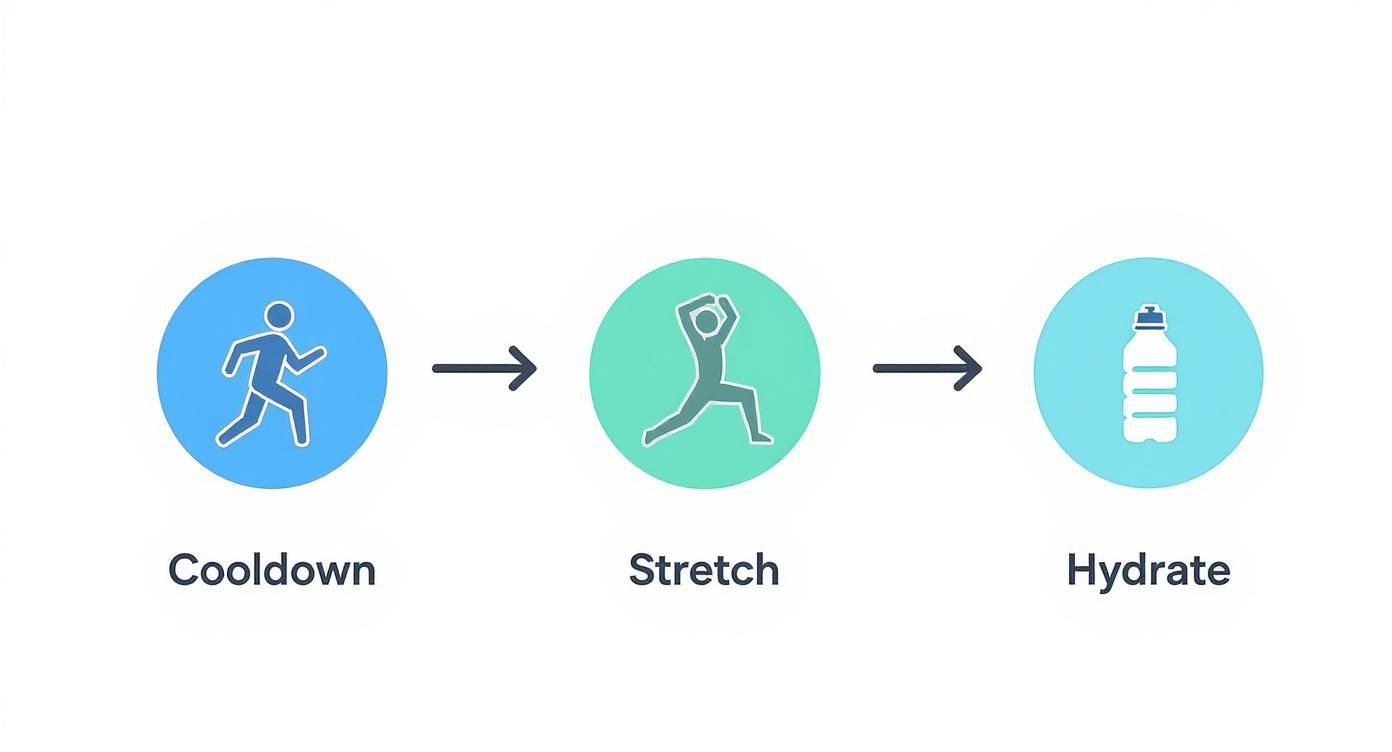
This visual is a great reminder that recovery isn’t just one thing. It's a process, and this mobility work is the critical step between your cooldown and rehydrating your body.
Beyond Rolling: Mobility Drills
Foam rolling is amazing for working out knots, but mobility drills are what actually give you back that fluid movement in your joints. After you're done rolling, flow through some gentle, controlled movements to open up your hips and legs.
Mobility isn't about forcing an aggressive stretch. It's about gently reminding your body how to move through its full, healthy range of motion without adding more stress.
Try adding in some simple drills like hip circles, controlled leg swings (both front-to-back and side-to-side), and a few cat-cows to release your lower back. These movements help lubricate your joints and are a lifesaver if you deal with chronically tight hip flexors.
If you consistently find your hips are tight and feel out of balance, it might be worth learning how to fix anterior pelvic tilt with specific exercises. Combining rolling with these drills is a powerful way to not only bounce back from a tough leg day but also to improve how you move in your next workout.
Fueling Your Recovery with Smart Nutrition
You can't out-stretch or foam roll a bad diet. Real recovery happens from the inside out, starting with what you eat and drink right after your workout.
After a brutal leg day, your muscles are screaming for nutrients to repair and rebuild. Think of them like sponges, ready to soak up everything you give them.

This isn’t just about eating something—it’s about eating the right things. Your mission is to refuel with two critical macronutrients: protein for muscle repair and carbohydrates to restock your energy.
The Power Duo: Protein and Carbs
Think of protein as the construction crew that arrives to fix the microscopic tears you just created in your muscles. Without it, your glutes and quads can't rebuild. Aim for 20-30 grams of high-quality protein within an hour or two of finishing your workout.
Carbohydrates are the fuel delivery truck. They rush to replenish the muscle glycogen you burned through all those squats and lunges. Skipping carbs will leave you feeling drained and can actually slow down recovery, because your body might start breaking down protein for energy instead of using it to build muscle.
Here are a few simple go-to meals that nail both:
- Greek Yogurt Bowl: A cup of plain Greek yogurt topped with a handful of berries and a little honey.
- Chicken and Sweet Potato: A grilled chicken breast with a baked sweet potato is the classic, perfect combo.
- Protein Smoothie: A scoop of protein powder blended with a banana, a bit of spinach, and almond milk for a super fast and easy option.
Your post-workout meal isn't a reward—it's part of the workout. Aiming for a 2:1 ratio of carbs to protein will make a huge difference in how fast you bounce back from leg day.
Hydration and Key Supplements
Don't forget about water. It's the unsung hero of recovery. Being even slightly dehydrated can make muscle soreness feel way worse and slows down the whole repair process. Keep sipping water all day, and maybe add an electrolyte powder to your bottle right after your workout to replace what you lost in sweat.
Beyond the basics, a few supplements can give you an extra edge.
- Creatine: It’s not just for performance. Creatine helps your muscles produce energy and has been shown to reduce muscle cell damage and inflammation after tough workouts.
- Magnesium: This mineral is huge for muscle function and relaxation. Taking magnesium can help ease cramps and seriously improve your sleep quality—which is when the real recovery magic happens.
Nailing your nutrition gives your body the exact tools it needs to come back stronger. For more ideas on what to eat, check out these high-protein meal prep ideas that are perfect for fueling your goals.
Leveraging Modern Recovery Tools and Tech
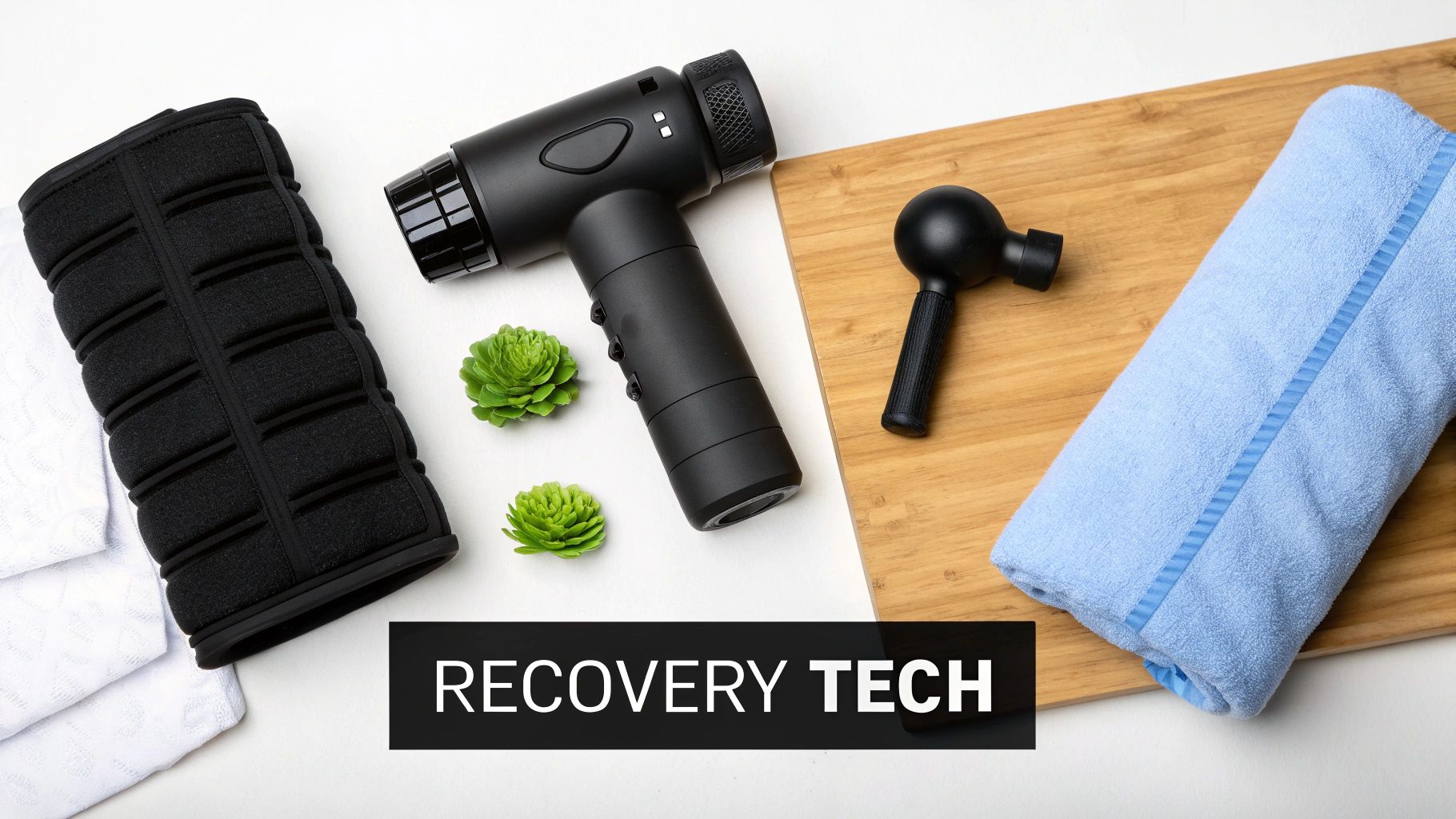
Okay, so we've covered the essentials like stretching and nutrition. But if you really want to level up your recovery game, it’s time to bring in some modern tools.
These aren't just trendy gadgets; they’re smart ways to help your body bounce back faster from a brutal leg day. Think of them as amplifying your body’s natural repair processes—speeding up circulation and breaking down muscle knots so you can get back to training, stronger.
Compression Gear for Faster Relief
One of the simplest and most effective tools you can use is compression gear. Pulling on a pair of compression leggings or socks after your workout isn't just a style choice—it’s an active recovery strategy.
That gentle, steady pressure helps your body flush out metabolic waste more efficiently by improving circulation. It’s a game-changer for reducing swelling and that dreaded next-day soreness (DOMS).
In fact, one study found that wearing compression tights for several hours after training significantly boosted blood flow, leading to less muscle pain and swelling. You can get into the details of the research on the effects of compression tights on recovery if you're curious.
Percussive Therapy with Massage Guns
Massage guns are everywhere for a reason: they actually work. By delivering rapid pulses of pressure into your muscle tissue, they perform what’s called percussive therapy. This helps increase blood flow, release muscle stiffness, and break up stubborn knots.
Focus on the big muscle groups in your legs—your quads, hamstrings, and glutes. Just be sure to avoid bony spots like your shins and kneecaps.
- Keep it moving: Don't just hold it in one spot. Gently glide the massage gun over the muscle.
- Short and sweet: You don't need to go crazy. A minute or two on each major muscle is plenty.
This kind of targeted relief can make a massive difference in how you feel the next day. And while massage guns are fantastic for daily use, don't forget the power of a professional sports massage therapy session for a deeper, more therapeutic release when you really need it.
Pro Tip: Try using your massage gun before you foam roll. The vibration helps relax the muscle, which can make your rolling session way more effective.
Contrast Water Therapy
You don't need any fancy equipment for this one—just your shower. Contrast water therapy is a simple hack that involves switching between hot and cold water.
The hot water opens up your blood vessels, and the cold water constricts them. This creates a "pumping" action that helps flush out lactic acid and reduce inflammation. It feels intense, but it’s a powerful way to kickstart your leg day recovery.
This method can also enhance how well your body uses recovery-focused supplements. If you’re curious about how certain ingredients support muscle repair, you might find our guide on what creatine does really helpful.
The Power of Strategic Rest and Active Recovery
Recovery isn't just something that happens after you leave the gym—it's an ongoing process. Your off days are just as critical as your training days, and the way you handle them determines how quickly you bounce back and how much stronger you get.
This is where smart, strategic rest and active recovery become your best friends. Think of it this way: your workout creates the potential for growth, but the actual growth happens when you rest. If you skip planning for downtime, you're leaving your progress on the table.
Sleep Your Way to Stronger Glutes
If you’re serious about building your glutes, you need to get serious about your sleep. This isn't just about feeling less tired; it's primetime for your body's most important repair work. While you’re in deep sleep, your body releases a huge amount of growth hormone, which is absolutely essential for repairing and rebuilding muscle tissue.
Skimping on sleep means you're short-changing your body's natural recovery cycle. Aim for 7-9 hours of quality sleep every night. It’s non-negotiable if you want to see the results from all those squats and lunges. This is when the magic really happens.
What an Active Recovery Day Should Actually Look Like
So, what does an effective "active recovery" day even mean? It’s definitely not another intense workout. Not even close. Instead, it’s all about gentle movement that promotes healing without causing any more muscle damage.
The goal here is simple: increase blood flow to your sore legs. This delivers fresh oxygen and nutrients to your muscles while helping flush out the metabolic junk that makes you feel so stiff and achy.
A few great options for active recovery include:
- A brisk 20-30 minute walk outside
- A light, casual bike ride (no hills!)
- A gentle swim or some water aerobics
- A slow, restorative yoga flow
Active recovery is your secret weapon for fighting that deep, can’t-sit-down soreness. It signals to your body to keep the healing process moving, preventing the stiffness that sets in when you just sit on the couch all day.
Structuring your week to include these light activities is a game-changer. It's also why you shouldn't be training legs back-to-back. Health guidelines recommend spacing out your resistance training sessions by at least 48 to 72 hours. This gives your muscles the time they actually need to repair and grow stronger. This recovery window is essential for maximizing your gains and avoiding burnout. You can dive into the full research on recommended rest intervals here.
By embracing both deep sleep and gentle movement, you create a powerful recovery system that ensures every single tough leg day translates into real, noticeable progress.
Common Leg Day Recovery Mistakes to Avoid
Sometimes, the fastest way to feel better is to stop doing the things that are keeping you sore. Even when your intentions are good, a few common slip-ups can completely sabotage your recovery and leave you hobbling around for days longer than necessary.
Let's break down the big ones.
The first mistake I see all the time is skipping the cooldown. I get it—you finish that last rep, you’re exhausted, and you just want to collapse. But going from an intense set of squats straight to a dead stop causes blood to pool in your legs, trapping all that metabolic gunk you just created. Just five minutes of easy walking or light cycling makes a massive difference in how you feel tomorrow.
Another one is under-fueling. Your muscles are starving after a tough session. Not giving them the protein and carbs they need within a couple of hours is like asking a construction crew to rebuild a house without any lumber or nails. It’s just not going to happen.
Pushing Through the Wrong Kind of Pain
You absolutely have to learn the difference between the "good hurt" of muscle soreness (what we call DOMS) and the sharp, screaming pain of an actual injury.
- Muscle Soreness (Good): This is that deep, general ache in the muscles you trained. They’ll feel tender to the touch, and it usually gets worse before it gets better, peaking around 24-48 hours after your workout. This is normal.
- Injury Pain (Bad): Think sharp, stabbing, or a nagging pain that’s pinpointed in one specific spot, especially near a joint. This is your body’s emergency brake. It’s a signal to stop, not a challenge to push through.
Pushing through sharp pain is the fastest way to sideline yourself with a real injury that could take you out of the gym for weeks. Soreness is a sign of progress; sharp pain is a warning.
Finally, please don’t aggressively stretch muscles that are already super sore. While gentle movement is great, yanking on inflamed, tender muscle fibers can actually cause more damage. Instead, stick with light mobility work or some gentle foam rolling to get the blood flowing without creating more micro-tears.
Answering Your Top Leg Day Recovery Questions
Even with a killer recovery plan, you’re still going to have questions. Let's get into the nitty-gritty of what women usually ask after a tough leg day, so you can stop guessing and start making real progress.
Knowing the timeline and what actually helps (or hurts) is everything. This is how you train smarter, not just harder.
How Long Should I Wait to Train Legs Again?
The classic rule of thumb is 48 to 72 hours before you go hard on the same muscles again. This isn't just arbitrary—it's the time your muscle fibers need to repair and come back stronger than before.
But let's be real, it's not a one-size-fits-all rule. Your perfect rest window really depends on a few things:
- How hard you went: A truly brutal, high-volume leg day might demand that full 72 hours, or even a little more.
- Your fitness level: If you're newer to lifting, you'll probably feel that deep soreness longer and need more time than someone who's been training for years.
- How you recover: If your nutrition, hydration, and sleep are dialed in, you’re going to bounce back much faster.
The best advice? Listen to your body. If you're still seriously sore and your mobility feels tight, give yourself another day. Pushing through is not the answer.
Is Cardio a Good Idea the Day After Leg Day?
Yes—but only the right kind. Light, low-impact cardio is your best friend for active recovery.
Think a 20-30 minute walk, a relaxed swim, or a casual bike ride. This gentle movement is amazing for boosting blood flow to your tired legs, which helps deliver fresh nutrients and clear out all that metabolic junk.
What you absolutely want to avoid is anything high-impact or intense. Sprinting, jumping, or a heavy spin class will just create more muscle damage and set your recovery back.
Are Ice Baths Really Necessary for Recovery?
You see pro athletes plunging into ice baths, and for good reason—they're a powerful way to shut down inflammation fast. But are they a must-have for you? Probably not.
In fact, some research suggests that hitting your muscles with intense cold too often might actually dull some of the signals that tell them to grow long-term.
A much more approachable (and less shocking) alternative is a contrast shower. Just alternate between hot and cold water on your legs. You get a similar circulation-boosting benefit without the extreme discomfort.
Ready to give your muscles the high-quality fuel they need to repair and grow? Bold Buns creatine is designed specifically to help women like you get the most out of every single workout and recovery day. Build stronger, fuller glutes by fueling your body for success. Learn more and get started at https://tryboldbuns.com.