

Protein Powder for Bigger Buttocks Explained
Absolutely. When you pair it with the right kind of training, using protein powder is a proven strategy for building bigger, stronger glutes.
Think of it this way: your glutes can't grow without the right fuel, and protein powder delivers exactly what they need to repair and rebuild after a tough workout.
How Protein Powder Actually Helps Your Glutes Grow
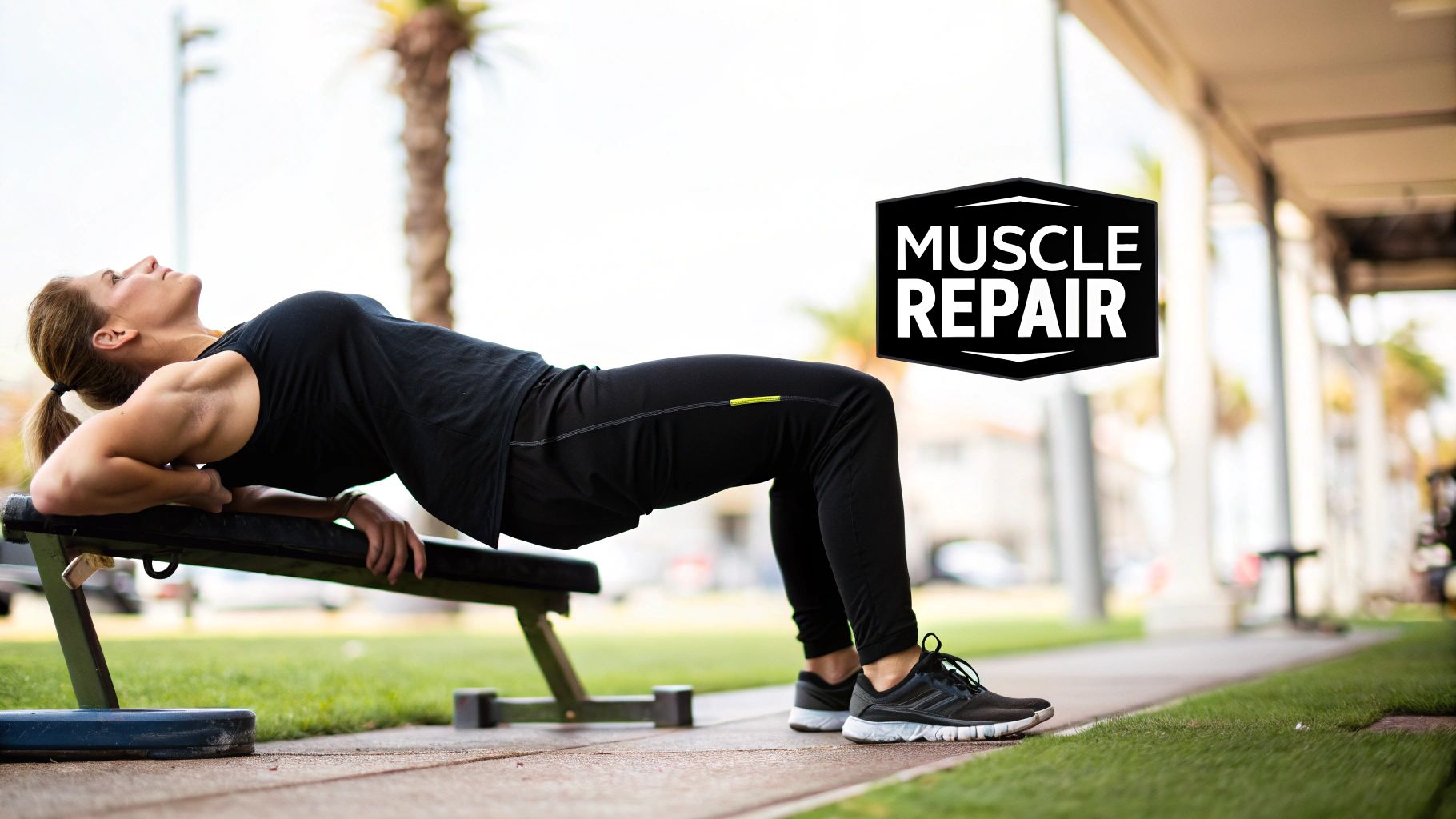
Let's cut through the noise. Protein powder isn't some magic pill that instantly adds inches. It’s a tool—a very effective one—for fueling muscle growth. And your glutes are just large muscles waiting for the right signal to get bigger.
That signal starts at the gym.
The Science Behind Building a Booty
When you do heavy, glute-focused exercises like weighted squats, hip thrusts, or lunges, you’re creating tiny micro-tears in the muscle fibers. This isn’t a bad thing; it’s the trigger for growth. Once you’re done with your workout, your body gets to work on the repair process.
This is where protein steps in.
Your body breaks down the protein you eat into amino acids—the literal building blocks of muscle tissue. It then sends those amino acids to your glutes to patch up the micro-tears, rebuilding the fibers bigger and stronger than they were before. This whole process is called muscle protein synthesis.
Without enough protein, your body is missing the raw materials it needs to properly repair and grow your glutes. You could be crushing every workout, but if the fuel isn't there, you'll never see the results you're working so hard for.
A good protein powder is just a fast, efficient way to give your body a concentrated dose of those essential amino acids, especially right after a workout when your muscles are primed for recovery.
Here's a simple way to think about it: Your workout is the demolition crew breaking down the old structure. Protein is the shipment of high-quality bricks your body uses to build a bigger, stronger building in its place.
To put it all together, here’s a quick look at how the process works from start to finish.
The Glute Growth Formula at a Glance
| Component | Your Role | The Result |
|---|---|---|
| Glute-Focused Training | Perform resistance exercises (squats, lunges, hip thrusts) to create micro-tears in the muscle. | You’ve sent the signal for your body to start rebuilding. |
| Protein Intake | Consume adequate protein, especially after your workout, to provide your body with amino acids. | Your body has the essential building blocks for repair. |
| Muscle Protein Synthesis | Your body uses the amino acids to repair the damaged muscle fibers, making them thicker and stronger. | This is hypertrophy—your glutes get bigger and rounder over time. |
This isn't just theory; it's a fundamental process. Get the training and the fuel right, and your body will do the rest.
Fueling the Growth
Research consistently shows that getting enough protein after a workout kicks muscle protein synthesis into high gear, leading directly to hypertrophy (the scientific term for muscle growth). Studies have even pointed to whey protein as being particularly effective for building lean muscle when you drink it post-workout.
Timing your protein intake strategically ensures your muscles have what they need, right when they need it most. And while protein powder is a major player, it’s just one piece of the puzzle. For a deeper dive into other powerful tools for growth, check out our guide on the best supplements for lean muscle.
Choosing the Right Protein Powder for Glute Growth
Walking into the supplement aisle can feel like a pop quiz you didn't study for. With so many tubs, labels, and promises, how do you actually find the best protein powder to grow your glutes?
The right choice will fuel your workouts and help your muscles repair and grow. The wrong one is just a waste of money and might be packed with stuff you don't need, like fillers and sugar. It all comes down to your body, your diet, and how fast you want those amino acids rushing to your glutes after a tough training session.
Whey: The Gold Standard for Fast Recovery
There's a reason whey protein is the most popular kid on the block. It's a complete protein, which means it has all nine essential amino acids your body can't make on its own. More importantly, it digests fast. This makes it the perfect go-to for that post-workout shake when your glutes are screaming for nutrients to start rebuilding.
You'll usually see two main types:
- Whey Concentrate: This is a fantastic starting point. It's effective, budget-friendly, and gets the job done. It does contain a bit more fat and carbs (including lactose) than its counterpart.
- Whey Isolate: Think of this as the purer, more filtered version. Most of the fat and lactose have been stripped out, leaving a faster-absorbing protein. It's an excellent choice if you're sensitive to dairy or keeping a close eye on your macros.
For most people focused on building a bigger butt, whey isolate gives you the biggest bang for your buck in terms of pure, fast-acting protein.
Casein: The Slow-Release Builder
If whey is the sprinter, casein is the marathon runner. Casein is also a milk-derived protein, but it digests incredibly slowly. This means it drips a steady stream of amino acids into your system over several hours.
This slow release makes casein a killer option for a shake right before bed. It helps keep your muscles in a growth state and prevents muscle breakdown while you sleep, giving you that round-the-clock fuel for your glutes.
A lot of pros use a two-pronged approach: whey right after a workout for that immediate repair signal, and casein before bed to fuel muscle growth overnight. It’s like giving your glutes 24/7 support.
Plant-Based Proteins: Powering Growth Without Dairy
Don't do dairy? No problem. Whether you're vegan, lactose intolerant, or just prefer to go plant-based, the quality of these protein powders has skyrocketed. They are more effective than ever.
The trick is finding a blend that creates a complete amino acid profile, since most single plant sources are incomplete on their own. Look for powders that mix sources like pea, rice, or pumpkin seed protein to cover all your bases. Digging into the science of plant-based protein for muscle building can help you pick a powder that truly supports your glute goals.
The drive for natural glute enhancement is a massive global trend. And while some people opt for surgery—buttock enhancement procedures shot up by 38.4% in 2019 alone—so many others are committed to building it the old-fashioned way. Combining targeted glute training with a complete protein source like whey is a proven, effective way to help your muscles repair and see real growth. You can learn more about how protein supports glute development and strength gains. Discover more insights about this topic on supersmart.com.
Perfecting Your Protein Timing and Intake
Nailing your protein strategy is more than just chugging a shake after your workout. If you want to see real growth, when and how much protein you get is just as important as the training itself. It’s not about some mythical "anabolic window," but about consistently giving your glutes the fuel they need to repair, rebuild, and actually grow.
Let's get one thing straight: the most critical time for a protein shake is within 30-60 minutes after you’ve finished your glute workout. Your muscles are primed and ready to soak up nutrients. A fast-digesting protein, like whey isolate, gets amino acids to them quickly, flipping the switch from muscle breakdown to muscle building.
Calculating Your Daily Protein Needs
To build your glutes, you need to be in a protein surplus. It’s that simple. You need more protein coming in than your body is using for its regular day-to-day functions.
A solid, science-backed target for muscle growth is 1.6 to 2.2 grams of protein per kilogram of body weight (that's about 0.7 to 1.0 grams per pound).
So, how do you figure out your personal goal?
- First, get your weight in kilograms: If you weigh yourself in pounds, just divide that number by 2.2.
- For example: A 140 lb person is about 63.6 kg (140 / 2.2).
- Then, find your range: Multiply your kg weight by 1.6 and 2.2.
- Using our example: 63.6 kg x 1.6 = 102g (your minimum) and 63.6 kg x 2.2 = 140g (your high end).
So, for someone weighing 140 pounds, the daily goal is somewhere between 102-140 grams of protein. A single scoop of protein powder can knock out 20-25 grams of that, making it way easier to hit your target.
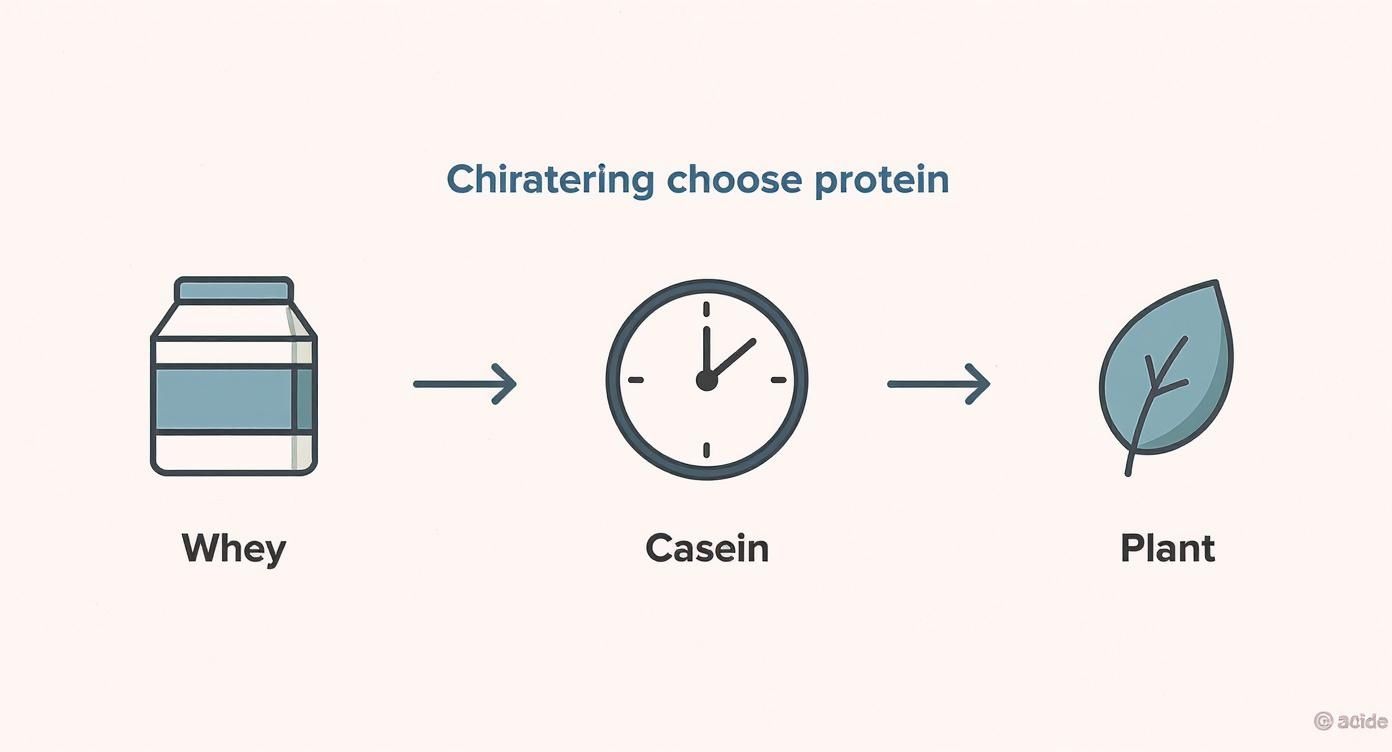
Think of it like this: fast-acting whey is your go-to right after a workout for a quick repair job. Slow-digesting casein is better for sustained fuel, like right before you go to bed, so your muscles get a steady drip of protein while you sleep.
Why Spreading Your Intake Matters
Don't try to cram all your protein into one or two massive meals. That's not how your body works. Instead, aim to spread your intake evenly across 4-5 smaller meals and snacks throughout the day.
This approach keeps a steady stream of amino acids available in your bloodstream, which means your glutes are constantly fueled for growth.
Think of it as keeping a construction crew on-site all day to build, rather than just having them show up for a couple of hours and leave. You get way more done with a consistent effort.
This steady supply is key for keeping the muscle you already have, too. Research has shown that whey protein supplementation is great for preserving lean muscle mass while you train. One study even found that a 40-gram daily dose helped people in an exercise program maintain muscle. That's huge, because you can't build new glute muscle if you're not even maintaining what you've got. You can dig into these protein findings here.
Sample Daily Protein Timing Plan for Glute Growth
Here’s a practical look at how you might structure your day to keep your muscles fed and happy, especially around a tough glute workout. This isn't a rigid rulebook, but a solid template to get you started.
| Time of Day | Meal or Snack | Protein Source Example | Purpose |
|---|---|---|---|
| 8:00 AM | Breakfast | Greek yogurt with berries & nuts | Start the day with a solid protein foundation. |
| 11:00 AM | Mid-Morning Snack | Hard-boiled eggs or a handful of almonds | Bridge the gap until lunch, keeping amino acids flowing. |
| 1:00 PM | Lunch | Grilled chicken salad or tofu stir-fry | Fuel the body for the afternoon and upcoming workout. |
| 4:30 PM | Pre-Workout | Small apple with peanut butter | Light fuel to power through your training session. |
| 6:30 PM | Post-Workout Shake | Whey protein shake with water or milk | Rapidly deliver amino acids to kickstart muscle repair. |
| 7:30 PM | Dinner | Salmon with quinoa and roasted broccoli | Replenish energy stores and provide sustained nutrients for recovery. |
| 9:30 PM | Before Bed | Casein protein shake or cottage cheese | Slow-release protein to prevent muscle breakdown overnight. |
This schedule ensures your body never runs out of the building blocks it needs, maximizing every single rep you do in the gym.
The Best Exercises for Your Protein Plan
You can chug the perfect protein shake and have your meals dialed in, but without the right training, those amino acids have nowhere to go. Think of your protein as high-quality building materials shipped to a construction site. Your workouts are the crew that actually builds the structure.
To get bigger, stronger glutes, you have to give them a reason to grow.
That reason is progressive overload. It’s the single most important rule of muscle growth, and it’s non-negotiable. It just means you have to consistently challenge your muscles more over time, forcing them to adapt by getting bigger and stronger. You can't do the same workout forever and expect new results.
The Foundation of Glute Growth: Progressive Overload
So, how do you actually apply progressive overload? You have a few simple tools to make your workouts harder over time.
- Add More Weight: This is the most obvious one. If you hip-thrusted 100 lbs for 10 reps last week, your goal is 105 lbs this week.
- Do More Reps: Can't go up in weight yet? No problem. Push for more reps with the same weight. Getting 12 reps where you used to get 10 is progress.
- Add Another Set: Increasing your total training volume by adding another full set to your main glute exercises is another great way to push past a plateau.
- Improve Your Form and Tempo: This is an underrated one. Slow down the lowering (eccentric) part of your lifts. This increases the time your muscles are under tension, creating more of that micro-damage that signals growth.
This consistent challenge is what tells your body to put that protein you're drinking to work. Without it, you're just maintaining.
Compound Movements: The Power Players
Compound exercises are the big, multi-joint movements that work several muscle groups at once. They let you lift heavier weight, which triggers a much bigger muscle-building response. These should be the foundation of your glute day.
For serious glute development, you have to include exercises like Barbell Hip Thrusts. It's arguably the king of glute exercises because it allows you to load up serious weight and put maximum tension right where you want it.
Other non-negotiable compound lifts include:
- Squats (Barbell, Goblet, Dumbbell): Focus on getting deep—past parallel—to really fire up your glutes.
- Romanian Deadlifts (RDLs): Nothing targets the glute-hamstring tie-in quite like an RDL.
- Walking Lunges: A killer dynamic movement that challenges your stability and hits each glute individually.
Always do these big lifts at the beginning of your workout when your energy is at its peak.
Pro Tip: Don't just move the weight from A to B—feel it. At the top of a hip thrust or out of the bottom of a squat, consciously squeeze your glutes hard. This mind-muscle connection is what ensures the right muscles are doing all the work.
Isolation Exercises for Shaping and Detail
While the big compound lifts build the mass, isolation exercises are what help you shape and sculpt the glutes. These movements target specific areas, like the gluteus medius and minimus (the muscles that give you that "side booty" shelf).
These are perfect for the end of your workout to make sure you've completely exhausted every last muscle fiber.
- Cable Glute Kickbacks: The cable provides constant tension through the entire movement, something free weights can't do.
- Banded Glute Bridges: Great for activation before you lift heavy, or as a finisher to get a serious burn.
- Side-Lying Hip Abductions: These specifically target the upper/side glutes to help create that rounder, fuller look.
Combining the power players with this kind of targeted detail work is the secret to a well-rounded routine. For a complete plan that puts all of this into action, check out our comprehensive booty-building workout plan—it’s designed to maximize your results.
Beyond the Shaker Bottle: Creative Protein Recipes
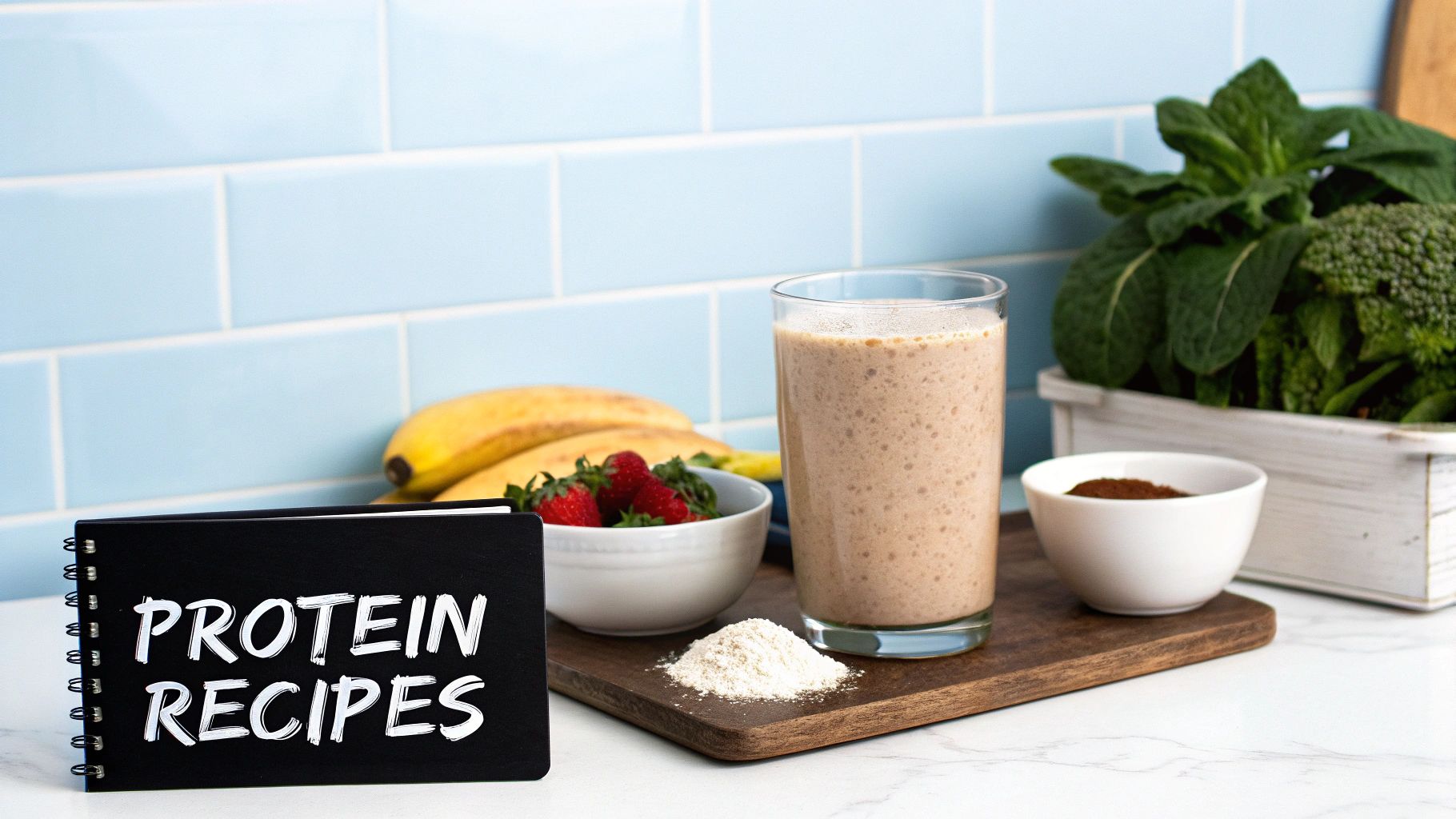
Let's be real—chugging the same chalky protein shake day after day is a one-way ticket to burnout. If you're going to stick with your nutrition plan long enough to see results, you have to actually like it.
Good news is, your protein powder is way more versatile than you think. Moving beyond the shaker bottle is surprisingly simple, and it's the secret to staying consistent. When your post-workout fuel feels like a treat instead of a chore, you’re so much more likely to nail your goals and build the glutes you're working for.
Post-Workout Smoothie Blends
A good smoothie is the easiest upgrade from a basic shake. Blending your protein with other powerhouse ingredients doesn't just make it taste better—it adds the clean carbs and healthy fats your body needs to kickstart recovery.
- Creamy Berry Builder: Blend one scoop of vanilla protein powder with a cup of unsweetened almond milk, a half-cup of frozen mixed berries, and a tablespoon of almond butter. The berries pack in antioxidants, and the almond butter adds healthy fats to keep you feeling full and satisfied.
- Glute-Fuel Green Machine: Throw one scoop of vanilla or unflavored protein powder into a blender with a big handful of spinach, half a frozen banana, a tablespoon of chia seeds, and a cup of water. You honestly won't taste the spinach, but you'll get a serious dose of micronutrients.
These simple blends turn your protein powder into a delicious mini-meal that gets right to work repairing muscle.
My Personal Tip: Freeze your bananas ahead of time! Using a frozen banana instead of a fresh one gives you an incredibly thick, creamy, milkshake-like texture without needing to add ice, which just waters down the flavor. It’s a total game-changer.
Smart Ways to Boost Your Everyday Meals
Protein powder isn’t just for drinks. Sneaking a scoop into foods you already eat is one of the easiest ways to hit your daily protein target without feeling like you're constantly sipping on a shake.
- Protein-Packed Oatmeal: Stir a half or full scoop of vanilla or cinnamon-flavored protein powder into your warm oatmeal after it's cooked. If you mix it in while cooking, it can get clumpy and weird.
- Upgraded Yogurt Bowls: Mix unflavored or vanilla protein powder right into a serving of plain Greek yogurt. Top it with some granola and fresh fruit for a high-protein breakfast that feels like a total indulgence.
- Fluffy Protein Pancakes: On a weekend morning, just add a scoop of your favorite protein powder to your pancake mix. It’s a perfect way to make a classic breakfast fit right into your glute-building plan.
By getting a little creative, you can turn your supplement from a boring powder into a flexible, powerful ingredient. If you need more inspiration for planning your meals, check out our guide to high-protein meal prep ideas—it’ll help keep your nutrition on point and anything but boring.
How to Track Your Glute Growth and Stay Motivated
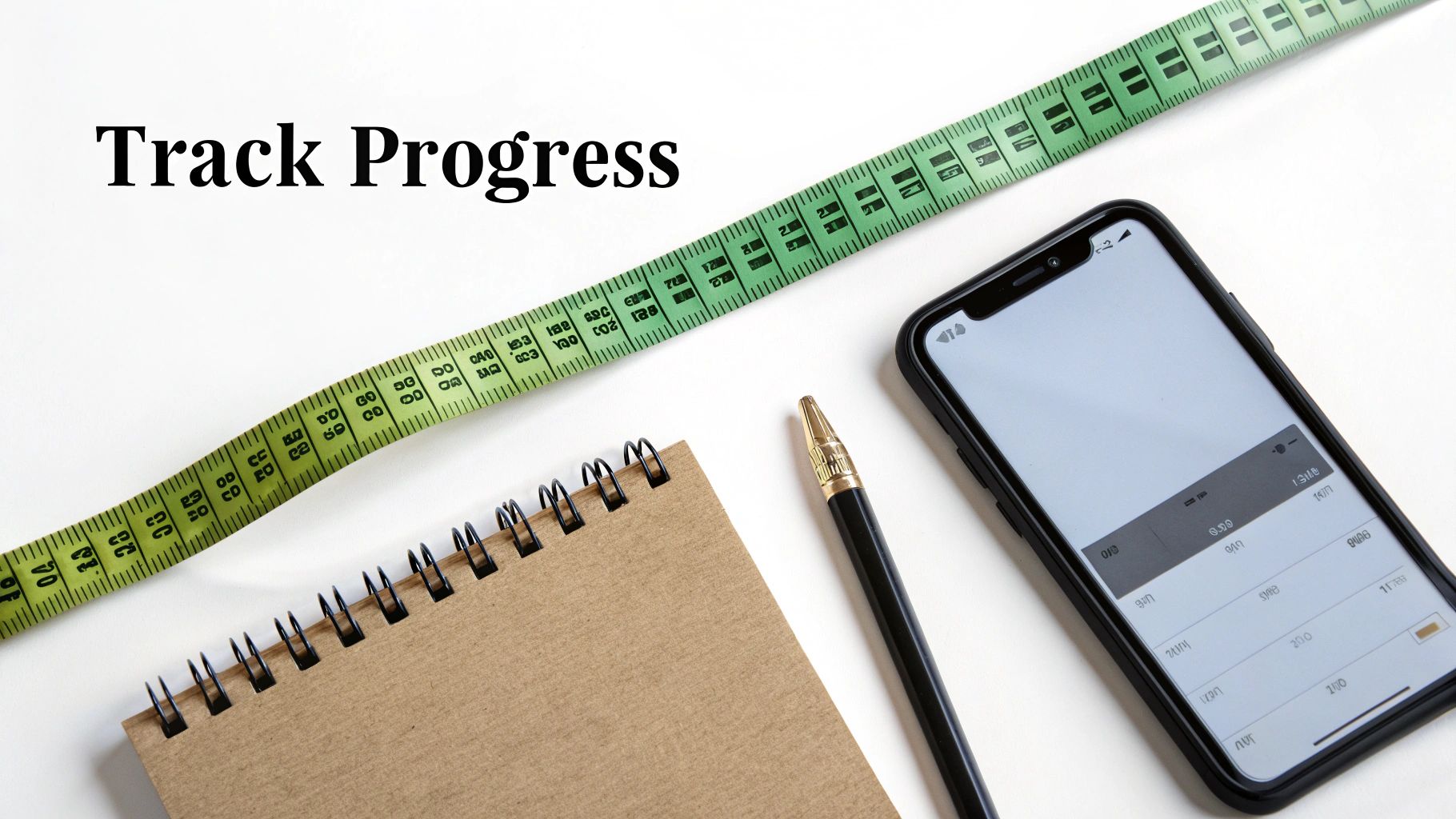
Watching your hard work pay off is what keeps you in the game. But if you’re trying to build your glutes, the bathroom scale is your worst enemy. It just doesn’t tell the whole story of muscle gain versus fat loss.
You need smarter, better ways to see the real changes happening. This is how you stay consistent long enough for your protein powder for bigger buttocks plan to actually deliver visible results.
Measure What Actually Matters
It’s time to ditch the scale. Grab a measuring tape and your phone instead. These are the only two tools you need to get the tangible proof that keeps you going.
- Progress Photos: Snap pictures from the front, side, and back every four weeks. Always use the same lighting, location, and outfit to get a true side-by-side comparison. You'll be amazed by the visual changes you’d otherwise miss just looking in the mirror day-to-day.
- Tape Measurements: Once a month, measure the widest point of your hips and glutes. Seeing that number go up—even by a quarter of an inch—is a concrete win that proves you're on the right track.
Building muscle is a marathon, not a sprint. Plateaus are going to happen. When they do, shift your focus to the non-scale victories: lifting heavier, feeling stronger in your leggings, or noticing your clothes fit differently. Those are the real signs of progress.
But the most powerful motivator of all? Tracking your strength.
When your hip thrust jumps from 135 lbs to 185 lbs, you have undeniable proof that you’re building a stronger foundation. And that raw strength is exactly what carves out the shape you're working for.
Still Have Questions? Let's Clear Things Up
When you're trying to figure out what actually works for your body, a lot of questions come up. Let's tackle the big ones I hear all the time about protein and building glutes.
Will Protein Powder Make Me Bulky or Fat?
This is probably the biggest myth holding women back. Let's be clear: protein powder does not magically make you bulky.
Fat gain happens from eating more calories than your body burns over time—not from one specific food or supplement. When you pair a smart protein strategy with glute-focused training, you’re giving your muscles the exact fuel they need to repair and grow into that strong, sculpted shape you’re working for. It’s for building curves, not unwanted bulk.
Can I Get a Bigger Butt Without Protein Powder?
Of course. You absolutely do not need protein powder to see results. Think of it as a tool, not a requirement. The real goal is hitting your daily protein target, and you can definitely get there with whole foods.
- Animal-Based: Lean options like chicken, fish, eggs, and Greek yogurt are fantastic.
- Plant-Based: Don't sleep on tofu, lentils, beans, and quinoa. They're total powerhouses.
The reason so many of us use supplements is simple: convenience. A shake is fast, easy, and incredibly effective right after a workout when your muscles are screaming for nutrients to start the repair process. It's a reliable shortcut to make sure your hard work in the gym actually pays off.
Everyone's timeline is different, but most women start to feel a change in muscle tone within 4-8 weeks of consistent training and nutrition. Seeing that significant, visible growth? That's a long game. Be patient—it often takes several months of real dedication.
Ready to build the glutes you've been working for with a formula designed for women? Bold Buns creates science-backed supplements to help you sculpt, tone, and feel confident.
Explore the Bold Buns difference and start your journey today.