
Myth vs. science
Does creatine actually bloat you?
Creatine is the most researched supplement for women's body composition. It's also the most misunderstood.

Somewhere along the way, "creatine" and "bloating" became a package deal in women's fitness circles. Search it and you'll find hundreds of comment sections full of women swapping the same warning: it'll puff you up. So most women who could genuinely benefit from it never open the tub. They stay stuck with lower energy, slower results in the gym, and muscle that quietly disappears with age, all to avoid a side effect that, in the form they're picturing, was never really about creatine in the first place.
We went digging through the actual clinical research and found something worth saying plainly: the water weight women fear and the water creatine actually moves are two completely different things happening in two completely different places in your body.
1Where the "bloating" fear actually came from
Almost every horror story traces back to the same source: a loading protocol. Early creatine research was done on male athletes, using doses of 20 to 25 grams a day for the first week, sometimes mixed with cheap, unfiltered creatine and dumped into a shaker with juice. That dose was never built for a 130 to 160 pound woman. It was built for a 200-pound football player trying to saturate his muscles as fast as possible.
Take a dose designed for a man's body, add a low-grade powder with a large, gritty particle size that's harder to fully dissolve and absorb, and you get exactly what women report: puffiness, GI discomfort, that "swollen" feeling under the skin. The story isn't wrong. It's just describing bad creatine, taken the wrong way, by the wrong dose, and it got pinned on the ingredient itself.
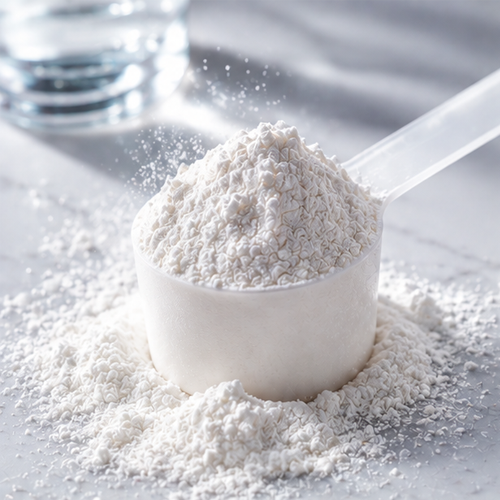
Particle size matters more than most labels admit. Coarse, non-micronized creatine dissolves poorly and sits in the gut longer.
2The water you're picturing isn't the water creatine moves
This is the part that actually changes the story. There are two totally different kinds of "water weight," and they don't feel or look the same:
What women picture
Puffy, soft, sits under the skin. Shows up in the face, fingers, and stomach. Comes from sodium, hormones, or GI irritation. This is what people mean when they say "bloated."
What creatine actually does
Draws water inside the muscle cell, not under the skin. It's intracellular hydration, the same mechanism that makes a well-hydrated muscle look fuller, tighter, and more defined, not softer.
Creatine works by pulling water into the muscle fiber itself, where it also helps regenerate the ATP your muscles burn for energy. That intracellular water is why lifters describe their muscles looking "fuller" on creatine. It's the same mechanism, just happening one layer deeper than the bloating people are afraid of. It doesn't go into your skin. It doesn't go into your belly. It doesn't go into fat tissue at all. It goes directly into the muscle you're training, which is exactly what makes that muscle look more toned, more defined, and more finished, not puffier.

3The part that actually flips the story
Here's what almost never gets said out loud: women naturally store 70 to 80% less creatine in their muscles than men do. It's not a flaw, it's biology. Less overall muscle mass means fewer storage sites, and women on average eat less red meat, the main dietary source of creatine. Add in how estrogen and progesterone affect creatine metabolism across the cycle, and women are, on average, starting from a much lower baseline than men ever were.
Which means the same logic flips entirely. If you're worried creatine will do "too much," the research says the opposite: women have more room to benefit from it, not less. You're not adding extra to an already-full tank. You're topping off a tank that starts a lot closer to empty, which is also part of why the effects, when they show up, tend to show up clearly.

"I was so nervous to try creatine because of everything I'd read. Three weeks in, no bloat at all, and I actually see a difference, especially my booty." Ashley S., verified customer
4So why do some women still feel it?
When creatine does cause real discomfort, it's almost always one of three fixable things, not the ingredient itself:
- Particle size. Standard creatine monohydrate is milled coarse. Micronized creatine is ground roughly 20x finer, which means it dissolves fully instead of sitting undigested in your gut.
- Loading doses. Jumping straight to 20+ grams a day spikes water retention and digestive load fast. A steady, moderate daily dose doesn't.
- Filler ingredients. Cheap tubs bulk up their scoop with sugar alcohols, maltodextrin, or artificial sweeteners, the actual, well-documented causes of gas and bloating in supplements.

Fix those three variables and the "bloating" that scared women away from creatine mostly disappears. What's left is the thing creatine was always supposed to do: fuller, better-hydrated muscle, more strength in the gym, and the energy to actually finish your workout.
The honest takeaway
"Does creatine bloat you?" is the wrong question. The right one is: "Is the creatine I'm taking micronized, third-party tested, and dosed for my body?" Get those three right, and the water works for you instead of against you.
5What we look for now, after digging into this
Once you know what actually causes the reaction women describe, the fix is straightforward. You just need a formula built around it instead of around a man's loading protocol from 20 years ago. That's the short list we'd personally check on a label before buying:
- Micronized creatine monohydrate, no loading phase required
- A clean, moderate daily dose, not a 20-gram bodybuilder protocol
- Zero sugar, zero artificial sweeteners, zero filler bulking agents
- Third-party tested for purity, made in a USA facility
We came across one brand that was built around exactly this: Bold Buns Creatine Boost. It's micronized creatine monohydrate at a clean 5g daily dose, with zero loading phase, zero sugar, and zero fillers, plus Verisol® collagen peptides added for skin and BCAAs for recovery. It's third-party tested and made in the USA. Every woman we spoke with about it independently used some version of the same phrase: no bloat at all.
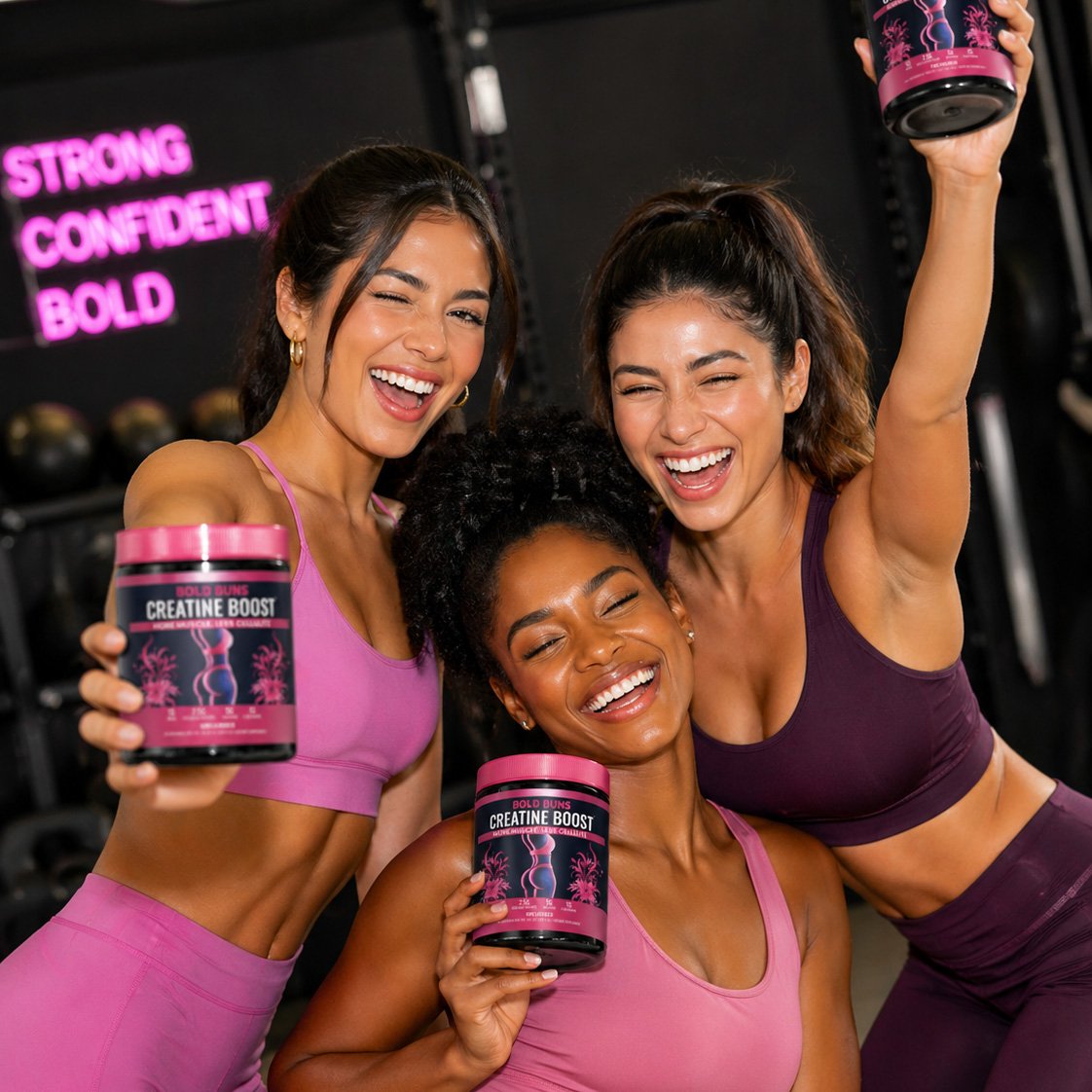
"No bloat at all! My glutes are noticeably rounder after 4 weeks. Didn't expect my skin to look better too." Jessica M., verified customer
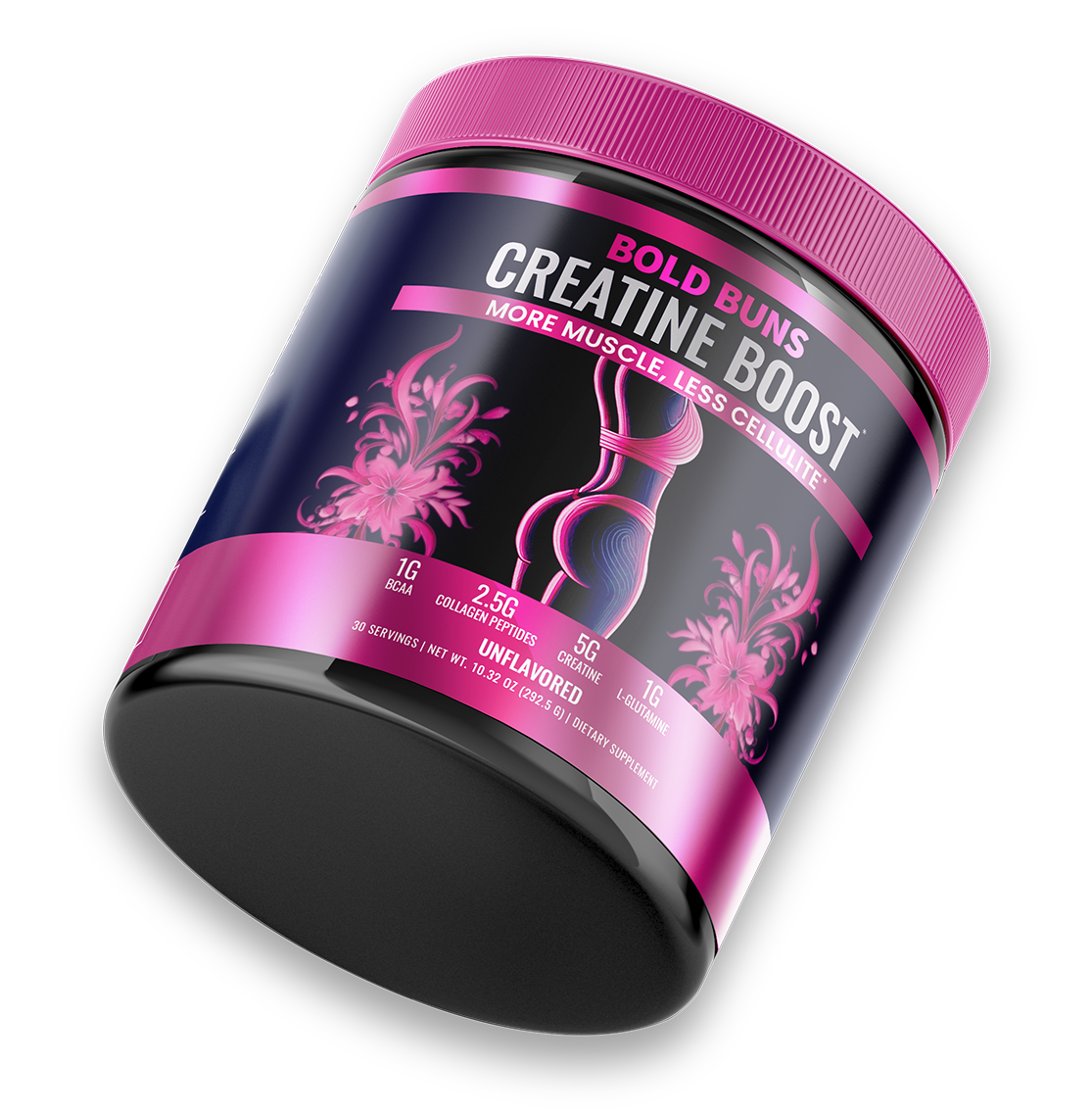
See the full breakdown
The formula built to avoid every mistake in this article
Micronized creatine, clean 5g dose, zero fillers, plus Verisol® collagen and BCAAs. See the research, the ingredient list, and current pricing.
See Bold Buns Creatine Boost →?Quick questions we kept getting
Will I still retain some water on creatine?
Some, and that's the point. It's held inside the muscle cell, which is what gives muscle a fuller, more defined look over time. It is not the puffy, under-skin feeling most women are picturing when they say "bloated."
How long before I know I'm not going to bloat?
Most women notice no digestive discomfort within the first few days on a micronized, properly dosed creatine, with visible muscle and energy changes building over 3 to 6 weeks of consistent use.
Do I need to do a loading phase?
No. A steady daily dose (Bold Buns uses 5g) gets you to full muscle saturation within about three to four weeks, without the water-retention spike that a loading phase can cause.