

Creatine Monohydrate Fat Loss for Women
Let's clear the air on this one. Creatine monohydrate supports fat loss indirectly. It’s not a magic fat-burning pill, but it does help you build a body that’s better at burning fat on its own. It works by making your workouts more effective, which helps you build lean muscle—and that muscle turns your metabolism up a notch, 24/7.
How Creatine Actually Supports Fat Loss
Think of creatine as a workout amplifier, not a fat burner. Its real job is to give your muscles more power and endurance, so you can lift heavier and push harder during your training. That extra effort is the secret link between creatine monohydrate and fat loss.
When you can consistently show up and give more in the gym, you create a stronger signal for your muscles to grow. And that’s where the real magic happens.
The Muscle and Metabolism Engine
Even a little bit of extra lean muscle makes a huge difference. Muscle is metabolically active tissue, which is just a fancy way of saying it burns calories even when you're resting on the couch. The more lean muscle you have, the higher your resting metabolic rate (RMR).
A higher RMR means your body’s engine is running hotter all day long, burning more calories whether you’re at your desk or asleep. This makes it way easier to get into a calorie deficit for fat loss without having to starve yourself.
This is the key to real, sustainable body recomposition. You’re not just losing weight; you're building a stronger, leaner body that works for you.
The goal shifts from just watching the scale go down to building a body that’s stronger and metabolically fired up. That’s the foundation for results that actually last.
The Evidence for a Leaner Body
This isn't just talk—the science backs it up. A major meta-analysis showed that taking creatine led to a small but significant drop in body fat percentage. The effect was strongest for people who combined creatine with resistance training and took more than 5 grams a day. You can explore the full research on fat percentage reduction here.
Here’s a quick breakdown of how creatine helps you build a leaner, stronger body.
Creatine's Role in Fat Loss at a Glance
This table sums up the key ways creatine helps you get leaner and stronger.
| Mechanism | How It Helps You Lose Fat |
|---|---|
| Increased Strength | Lets you lift heavier and do more reps, which is exactly what your muscles need to grow. |
| Enhanced Endurance | Helps you power through tough workouts, burning more total calories each session. |
| Lean Muscle Growth | Builds that metabolically active tissue that cranks up your resting metabolic rate. |
| Improved Recovery | Allows you to train harder and more often, which speeds up your progress over time. |
Ultimately, creatine creates a powerful cycle: better workouts lead to more muscle, and more muscle leads to a higher metabolism and more effective fat loss.
The Science of Building a Better Metabolism
To get why creatine monohydrate is a game-changer for fat loss, we have to look at how your muscles actually work. Picture each muscle cell as a tiny factory powered by rechargeable batteries called adenosine triphosphate (ATP). Every single move you make—from lifting a dumbbell to walking up the stairs—runs on ATP.
During an intense workout, like a heavy set of squats or a sprint, your muscle factories go into overdrive and drain those ATP batteries almost instantly. That sudden power crash is what causes muscle fatigue and forces you to end your set.
This is where creatine steps in.
The Ultimate Energy Recharging System
Creatine basically acts as a rapid-recharge station for your tired ATP batteries. When you supplement with it, your muscles store more of a high-energy compound called phosphocreatine. This compound can instantly donate a phosphate molecule to "recharge" ADP (a dead battery) back into ATP (a fully charged one).
This all happens in seconds, giving your muscles an immediate burst of fresh energy. The result? You can push out one or two more reps, lift a little heavier, or sprint for a few extra seconds. These small improvements are the critical first step in building a more efficient, fat-burning metabolism. If you want to go deeper on how it works, our guide on what does creatine do breaks it all down.
It might not seem like much, but when you stack up those small wins over weeks and months, they trigger serious muscle growth.
Turning Performance Gains into Metabolic Upgrades
Every extra rep you squeeze out sends a powerful signal to your body: adapt and get stronger. This consistent challenge is what kicks off the process of building new, metabolically active lean muscle. And the more lean muscle you have, the more calories your body burns around the clock—even at rest.
It's like upgrading your car's engine. A small, standard engine burns a certain amount of gas just idling. But a bigger, more powerful engine burns way more fuel just to keep running. Building muscle is like giving your body a bigger, hungrier metabolic engine.
This is the real secret behind the creatine monohydrate fat loss connection. You aren't just burning more calories during your workout; you're fundamentally changing how much energy your body uses every single day, making fat loss feel less like an uphill battle.
This visual shows that simple but powerful chain reaction, from better performance to a faster metabolism.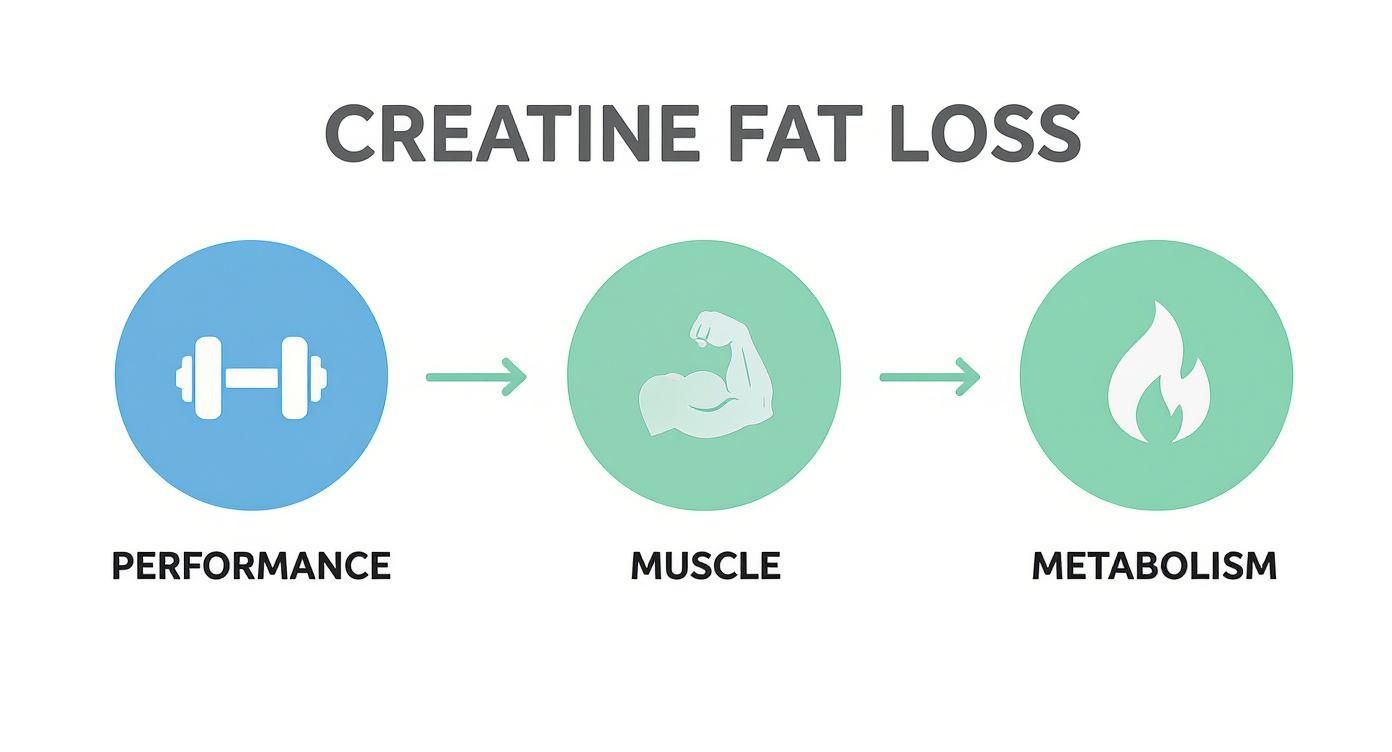
The takeaway is simple: creatine’s effect on fat loss starts by helping you crush your workouts.
The Real-World Application for Your Goals
Let's put this into practice. Say you're doing glute bridges and usually max out at 12 reps. Once your creatine stores are full, you might find you have the juice to push through and hit 14 reps with the same weight.
That small victory does more than just feel good—it’s the biological trigger for growth. Your body responds to that extra demand by repairing and building stronger glute muscles. Over time, that translates to a firmer, more lifted booty and a higher overall calorie burn.
Key Takeaway: Creatine doesn't magically burn fat. It fuels the high-quality workouts that build lean muscle, and that new muscle is what turns your body into a more efficient fat-burning machine 24/7.
Of course, all that hard work needs the right fuel. While creatine powers your performance, mastering macros for weight loss is non-negotiable for seeing real changes. Proper nutrition gives your body the building blocks it needs to repair and grow the muscle you're working so hard for. It’s the combination of smart supplements, effective training, and solid nutrition that truly unlocks your potential.
Why Creatine Causes Water Weight, Not Fat Gain
This is the number one question I get from women starting creatine. You’re working your butt off to hit your goals, so the last thing you want is for the scale to jump up. It's a totally valid fear, but it comes from a misunderstanding of what creatine actually does in your body.
Let’s clear this up: the initial weight you might see isn’t fat. It’s just water—and it's the first sign the supplement is doing its job.
The Good Kind of Water Weight
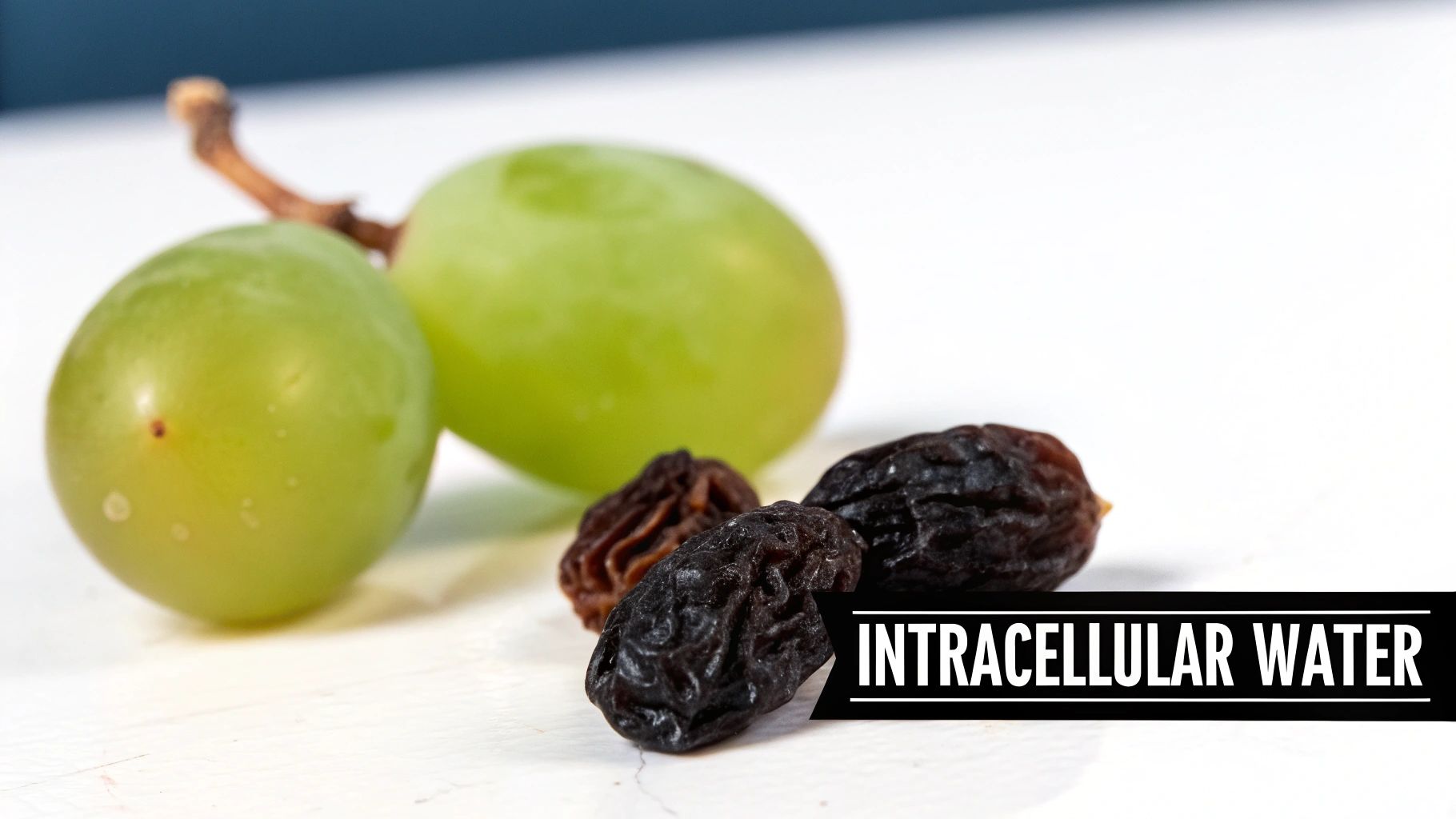
Creatine is an osmolyte, which is just a science-y way of saying it attracts water. When you start taking creatine monohydrate, it travels to your muscle cells and pulls water in right along with it. This process is called intracellular hydration, meaning water is stored inside your muscle cells.
Think about a plump, juicy grape versus a shriveled-up raisin. The grape is full of intracellular water, making it look firm and full. The raisin lost all that water and is now deflated. Creatine helps your muscles act more like that grape—hydrated, strong, and ready to work.
This is completely different from that puffy, uncomfortable feeling you get from bloating, which is when water gets trapped under the skin. The water creatine pulls in actually makes your muscles look fuller and more defined, not soft or bloated.
Why Hydrated Muscles Are a Positive Sign
When your muscles are fully hydrated like this, they just work better. This extra water helps with protein synthesis (the process that builds new muscle) and gives your muscles more power for stronger lifts. That initial one-to-three-pound jump on the scale is actually fuel for your progress.
That initial uptick on the scale is a good thing. It means your muscles are primed with the water and energy they need to power through tougher workouts—which is exactly why you're taking creatine in the first place.
It's easy to get spooked by that initial change, but knowing the difference between healthy muscle hydration and actual fat gain is everything. If you want to dive deeper, we have a whole guide explaining why the way creatine causes weight gain is actually beneficial for your goals.
What This Means for Your Fat Loss Journey
Okay, so how do you get through this initial phase without feeling discouraged? It’s all about shifting your focus to the right metrics.
- Trust the process. That water weight is temporary. Think of it as the foundation for the strength gains that are about to come.
- Look beyond the scale. Your total body weight isn't the best way to track fat loss, especially when you start building lean muscle. Instead, focus on progress photos, how your clothes fit, and body measurements.
- Track your performance. Are you getting stronger? Can you squeeze out an extra rep or lift a little heavier? These are the real signs that creatine is working for you.
This initial water retention isn’t a setback; it’s a launchpad. It’s the first signal that your muscles are loaded up with the fuel they need to build a leaner, stronger, and more metabolically active body. Once you’re past this phase, you’ll start seeing the real magic happen.
A Practical Guide to Using Creatine Effectively
Alright, enough science. Let's turn what we know into what you do. This is your playbook for getting real results, with simple, sustainable advice for women who want to lose fat and build a stronger, more defined physique.
Forget about complicated supplement schedules or confusing protocols. The best way to use creatine monohydrate is also the simplest, which means you can easily build it into your daily routine and stick with it.
Finding Your Perfect Daily Dose
For years, the fitness world pushed a "loading phase"—taking huge doses of creatine for a week to saturate your muscles fast. While it works, this is usually what causes the temporary bloating and stomach issues some women worry about.
There's a much better way. For most of us, a simple, low-dose daily habit is the gold standard.
Taking just 3 to 5 grams of creatine monohydrate every single day gets the job done perfectly. This method gently fills up your muscle stores over about three to four weeks without the nasty side effects, making it a much more pleasant—and sustainable—strategy.
The Bottom Line: Stick with a consistent daily dose of 3-5 grams. It's effective, easy on your stomach, and gets rid of the need for a complicated loading phase. It just works.
This small daily habit is what keeps your muscles topped off with the energy they need to perform, which is the real secret behind the creatine and fat loss connection.
Simple Creatine Strategies for Women
Here’s a quick breakdown of the dosing methods to help you choose the best approach for your fat loss goals.
| Strategy | Daily Dose | Pros | Cons |
|---|---|---|---|
| Low-Dose Daily (Recommended) | 3-5 grams | Very low risk of side effects like bloating; easy to maintain long-term. | Takes 3-4 weeks to fully saturate muscles. |
| Loading Phase (Optional) | 20 grams (split into 4 doses) for 5-7 days, then 3-5 grams daily. | Saturates muscles faster (in about a week). | Higher chance of digestive issues and water retention; not necessary for most people. |
For sustainable fat loss and body composition changes, the low-dose daily strategy is almost always the smarter choice. It delivers all the benefits without the discomfort.
Timing and Smart Nutrition for Better Results
So you’ve got your dose sorted. When should you take it?
Honestly? Consistency beats timing, every single time. The most important thing is to take your creatine every day, so just pick a time that you know you won't forget. Morning smoothie? Post-workout shake? It doesn’t matter, as long as you do it.
But if you want to give it a little boost, here are a few tips:
- Pair It with a Meal: Taking creatine with some carbs and protein can help your body absorb it a little better. The insulin your body releases after a meal helps shuttle the creatine right into your muscle cells.
- Toss It in Your Post-Workout Shake: This is a super convenient and popular option. Right after a workout, your muscles are like sponges, ready to soak up nutrients, making it a great time to refuel.
- Stay Hydrated: This is a big one. Creatine works by pulling water into your muscles, so you need to drink plenty of water throughout the day to support its function, help with recovery, and feel your best.
Following these simple rules creates the perfect environment for creatine to get to work, backing up all the effort you put in at the gym.
The Non-Negotiable Training Connection
Let's be crystal clear about this: creatine is not a magic pill. Its benefits are only unlocked by your effort. You can't just take it and expect to see changes. It works by giving you the fuel to push harder during high-intensity exercise.
That makes resistance training your non-negotiable partner in this journey.
Your workout program needs to be built on progressive overload—the simple idea of gradually asking your muscles to do more over time. That could mean lifting heavier weights, squeezing out one more rep, or just perfecting your form.
The research on this is powerful. One major review found that when people combined daily creatine with resistance training, they lost significantly more body fat—1.19% more, to be exact—than the people who only did the training. You can read the full study findings on body composition here.
Think of it this way: creatine hands you the keys to a faster car, but you still have to step on the gas. Pairing it with a smart strength training program is the only way to unlock its full potential for building lean muscle and finally seeing real, meaningful fat loss. It gives you the power to work harder, and that hard work is what will reshape your body.
How to Choose a High-Quality Creatine Supplement
Walking down the supplement aisle can feel overwhelming. With so many tubs and flashy labels all promising insane results, how do you know what actually works—without just paying for marketing hype?
The good news is, the best choice is also the simplest and most affordable one. You don’t need some fancy, complicated formula. The undisputed gold standard, backed by decades of research, is creatine monohydrate. It’s the most studied form of creatine on the planet, and the science confirms it works for improving strength, building lean muscle, and supporting your physique goals.
Stick with the Proven Winner Creatine Monohydrate
You’ll see other types on the shelf, like creatine hydrochloride (HCL), buffered creatine (Kre-Alkalyn), or creatine ethyl ester. These newer versions often have a higher price tag and claim they’re better absorbed or have fewer side effects. The reality? They lack the mountain of evidence that supports good old-fashioned monohydrate.
The truth is, creatine monohydrate already absorbs incredibly well. For the vast majority of women, there's zero proven benefit to spending more money on these other forms. Sticking with monohydrate means you're getting a product that’s proven to deliver the results you’re working for.
When it comes to creatine, more expensive does not mean more effective. Creatine monohydrate has been the king for decades for a reason—it’s safe, heavily researched, and it just works.
What to Look for on the Label
Okay, so you’ve settled on creatine monohydrate. Now what? There are a couple of key things to check on the label to make sure you're getting a top-quality product. These details can make a huge difference in your experience.
Here’s your simple checklist:
- Look for Micronized Powder: This just means the creatine particles have been broken down to be smaller, which helps it dissolve way more easily in water. It gets rid of that gritty texture some people hate and can be much gentler on your stomach.
- Check for Third-Party Certifications: This is your quality guarantee. Look for logos from independent labs like NSF Certified for Sport or Informed-Sport. These certifications mean the product has been tested for purity and is free from banned substances, so you know what’s on the label is exactly what’s in the tub.
Choosing a product with these features ensures you get a pure, effective supplement that mixes well. While navigating the world of supplements can be tricky, it's helpful to understand the broader landscape. Exploring resources on the best supplements for athletes can provide context on where creatine fits into a well-rounded performance strategy.
Finding a supplement that minimizes discomfort is also a huge plus. Many women worry about bloating or stomach issues, so it's worth checking out our guide on the best creatine without bloating to find an option that works comfortably for you.
Ultimately, a high-quality creatine monohydrate supplement is a simple, powerful, and budget-friendly tool to support your creatine monohydrate fat loss goals by helping you build the strong, toned body you’re working for.
Measuring Progress Beyond the Bathroom Scale
If you're trying to build a leaner, stronger body, the scale can feel like your worst enemy. Especially when you start your creatine monohydrate fat loss journey.
You’re building dense, lean muscle while shedding body fat. It's an amazing process called body recomposition, but it often means the number on the scale barely budges. That can be incredibly frustrating if that's all you're looking at.
It's time to throw out the old rules. Your success isn’t measured in pounds; it’s measured in strength, confidence, and the visible changes you see in the mirror. Let's shift your focus to metrics that actually reflect your hard work.
See the Changes with Photos and Measurements
The most powerful way to see your body changing is to actually look at it. A single number on the scale will never capture the full story. Two methods are non-negotiable for showing you what's really happening.
- Progress Photos: Snap pictures from the front, side, and back every four weeks. Try to use the same lighting, clothes, and poses each time for a true comparison. These visual snapshots will show you changes in muscle definition and shape that you’d otherwise miss.
- Body Measurements: Grab a soft measuring tape and track key areas like your waist, hips, glutes, and arms. Even if the scale is stuck, you’ll probably notice your waist getting smaller as your glutes and quads get firmer. That's the definition of successful body recomposition.
These methods give you real proof that you're on the right track, and there’s nothing more motivating than seeing your efforts pay off.
When you build muscle and lose fat simultaneously, the scale lies. Progress photos and body measurements tell the truth about your changing body composition.
Feel the Difference in Your Performance
Beyond what you can see, pay attention to what you can do. Creatine's main job is to make you stronger, and how you perform in the gym is the ultimate sign that it’s working.
Start tracking your workouts in a journal or an app. Write down the weights you’re lifting, the reps you complete, and how you feel during your training. Are your hip thrusts getting heavier? Can you squeeze out one more rep on your squats than you could last week? Those are the wins that matter.
These performance gains are the engine driving your fat loss and body transformation. Focusing on these strength milestones reinforces the truth: success is built rep by rep, not pound by pound. You're building a more powerful, capable body—and the scale can never measure that.
Common Questions About Creatine and Fat Loss
When your goal is a leaner, more toned physique, figuring out supplements can feel overwhelming. Let’s cut through the noise and tackle the biggest questions women have about creatine monohydrate and fat loss.
These are the clear, science-backed answers you need to feel confident and ready to get the results you’re working for.
Do I Need to Cycle Creatine to Lose Fat?
Nope. That old advice to cycle creatine—taking it for a few weeks, then stopping—is based on outdated myths that research has completely debunked.
For fat loss, consistency is your greatest ally. Taking 3-5 grams of creatine every day keeps your muscles fueled for the kind of high-quality training that actually changes your body composition. Think of it like watering a plant; you do it consistently, not just for a few weeks at a time.
Can I Take Creatine if I Only Do Cardio?
You can, but you'll be missing the point. Creatine’s real magic happens when it fuels short, powerful bursts of energy. That’s the stuff of resistance training and high-intensity interval training (HIIT)—not long, slow jogs.
It’s that intense training that builds lean muscle, which in turn revs up your metabolism. If you’re only doing steady-state cardio, the benefits will be minimal at best. To truly unlock creatine's fat-loss potential, pair it with a solid strength training routine.
Creatine is the fuel for your strength workouts. You need both working together to see real changes in your body shape.
Will Creatine Make Me Look Bloated Before an Event?
This is probably the #1 fear women have, but it comes from a misunderstanding. Creatine pulls water into your muscle cells, not under your skin. This gives your muscles a fuller, harder, and more "toned" look—it’s the good kind of water retention.
It is not the same as subcutaneous bloating caused by your cycle or a salty meal. But if you’re nervous about the scale fluctuating right before a big event, just start taking creatine several weeks beforehand. That gives your body plenty of time to adjust so you look and feel your absolute best.
At Bold Buns, we’re here to give you the knowledge and the tools to succeed. Our clean, effective creatine formula is made to help you build strength, tone your body, and hit your goals with total confidence.
Discover the Bold Buns difference and start sculpting your dream body today.