

Does Creatine Cause Weight Gain? The Definitive Answer
Yes, creatine causes weight gain—but it's not the kind you're probably worried about. The initial jump you see on the scale is just water being pulled into your muscles, not fat.
This is actually a good sign. It means the supplement is working to make your muscles fuller, stronger, and ready for your workouts.
Unpacking the Two Types of Creatine Weight Gain
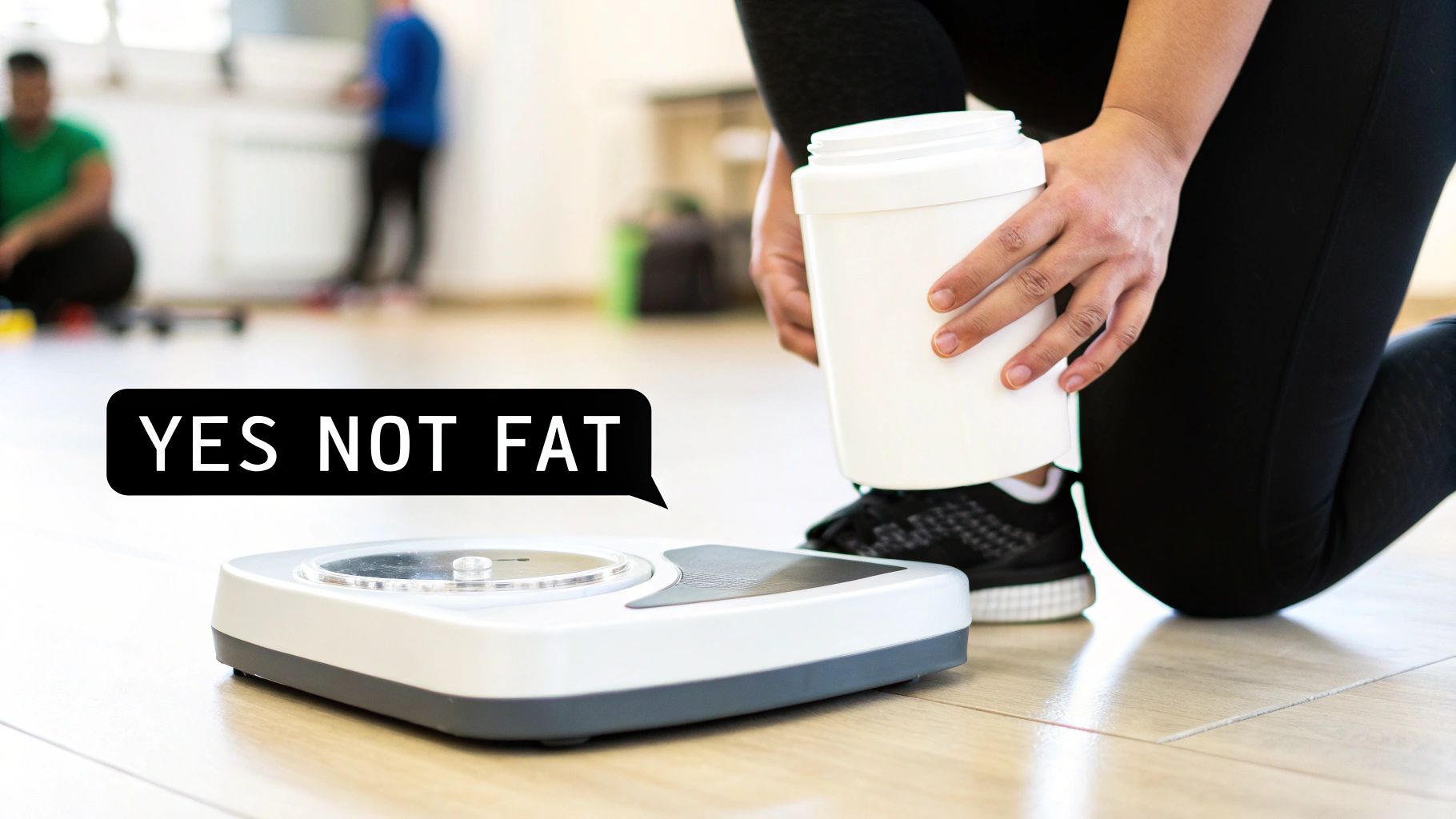
When you hear "weight gain," your mind probably jumps straight to unwanted body fat. Let's clear that up right now—when it comes to creatine, that’s not what’s happening. The increase you see on the scale is a two-part process, and once you understand it, you'll see why that initial bump is a great thing.
First, creatine works by drawing more water inside your muscle cells. Think of your muscles like sponges; creatine helps them soak up and hold onto more water. This process is called cell volumization, and it’s what causes that quick (but temporary) weight increase in the first week.
The Initial Water Weight Phase
This is where all the confusion comes from. But this isn't the same puffy, under-the-skin bloating you get from a salty meal. This is intramuscular water, meaning it's inside the muscle itself.
The result? Your muscles look fuller and feel firmer.
The science backs this up. It’s totally normal to see a quick jump of about 0.7 to 1.0 kilograms (that’s roughly 1.5 to 2.2 pounds) in the first week of taking creatine. This is almost entirely due to that initial water pull, which you can read more about in studies on how creatine affects body mass.
The Desirable Muscle Gain Phase
After that first week, the story changes. Any weight you gain from here on out is the result you’re actually working for: lean muscle mass.
Creatine gives you the power to push harder and lift heavier in the gym. Over time, that extra effort translates directly into building more muscle.
This is the weight gain you want. It's your hard work paying off in the mirror. It means your body composition is improving—you're getting stronger and more toned, not storing fat.
So, while the scale might go up, it’s crucial to know the difference:
- Initial water weight: Quick, temporary, and a sign the creatine is working.
- Long-term muscle gain: The sustainable, sculpted results you’re building in the gym.
To make it even clearer, let's break down the two types of weight gain side-by-side.
Creatine Weight Gain at a Glance: Water vs. Muscle
This table gives you a quick snapshot of the two phases, so you know exactly what to expect and why it's happening.
| Attribute | Water Weight (Initial Phase) | Muscle Mass (Long-Term) |
|---|---|---|
| What Is It? | Increased water stored inside muscle cells. | Actual growth of new muscle tissue. |
| Timeline | First 1-2 weeks of starting creatine. | Occurs over months of consistent training. |
| Magnitude | A quick increase of 1.5-2.2 lbs (0.7-1.0 kg). | Slower, steady gain depending on training/diet. |
| Appearance | Muscles look fuller and more "pumped." | Visible increase in muscle size and definition. |
| Why It's Good | Shows creatine is hydrating your muscles. | A direct sign of getting stronger and building shape. |
Think of the water weight as priming the pump. It’s the first step that sets you up for the real prize: strong, toned muscle that you've earned.
How Creatine Causes Water Weight Gain
When you first start taking creatine, that initial jump on the scale isn't fat. It's actually the first sign that the supplement is getting to work.
Creatine acts like a magnet for water, pulling it directly into your muscle cells. This process is called cell volumization, and it's the real reason behind that quick, early weight gain.
Picture your muscle fibers as tiny, deflated balloons. When you take creatine, it enters these cells and brings water along with it, "inflating" the muscle. This makes it feel fuller, firmer, and physically larger. This is completely different from the uncomfortable, puffy bloating you might get under your skin after a really salty meal.
What you're experiencing is intramuscular water, and it sends a powerful signal to your body. The swelling of the muscle cell creates a type of productive stress that tells your body it's time to kickstart muscle growth and repair. This is what helps you get stronger over time.
Why Intramuscular Water Is a Good Thing
That initial water weight is a positive sign. It means the creatine has been absorbed and is saturating your muscles, getting them ready for better performance in the gym. A well-hydrated muscle is a more powerful and efficient one.
This process delivers two key benefits:
- Performance Boost: All that extra water helps your muscles produce energy more efficiently, allowing you to lift heavier or squeeze out a few more reps.
- Enhanced Muscle Fullness: Cell volumization is what gives you that toned, "pumped" look. It makes your muscles appear rounder and fuller.
Think of that initial 1-2 pounds of water weight as the first step in a powerful chain reaction. It sets the stage for the real, long-term gains in lean muscle you're working so hard for.
What Does This Mean for Bloating
A common worry, especially for women, is whether this will cause uncomfortable, gut-related bloating. Since the water is held inside your muscle tissue, it almost never causes the kind of puffy, digestive bloating you might get from food or hormonal changes.
However, everyone's body is different, and some people are more sensitive to this initial fluid shift. If you're concerned about it, you can look for some of the best creatine options designed to minimize bloating while still giving you incredible results.
Ultimately, this initial water gain is temporary and a crucial part of how creatine helps you build a stronger, more sculpted body.
Your Weight Gain Timeline: What to Expect and When
If you’re watching the scale, understanding how creatine works can make all the difference. The number goes up, but it’s not a straight line—it happens in two totally different phases. Knowing the timeline helps you see the progress for what it is: your body getting stronger.
Think of your weight gain journey with creatine as a quick, initial spike followed by a much slower, steadier climb.
This infographic breaks down what that actually looks like, from day one through the first few weeks of taking it consistently.
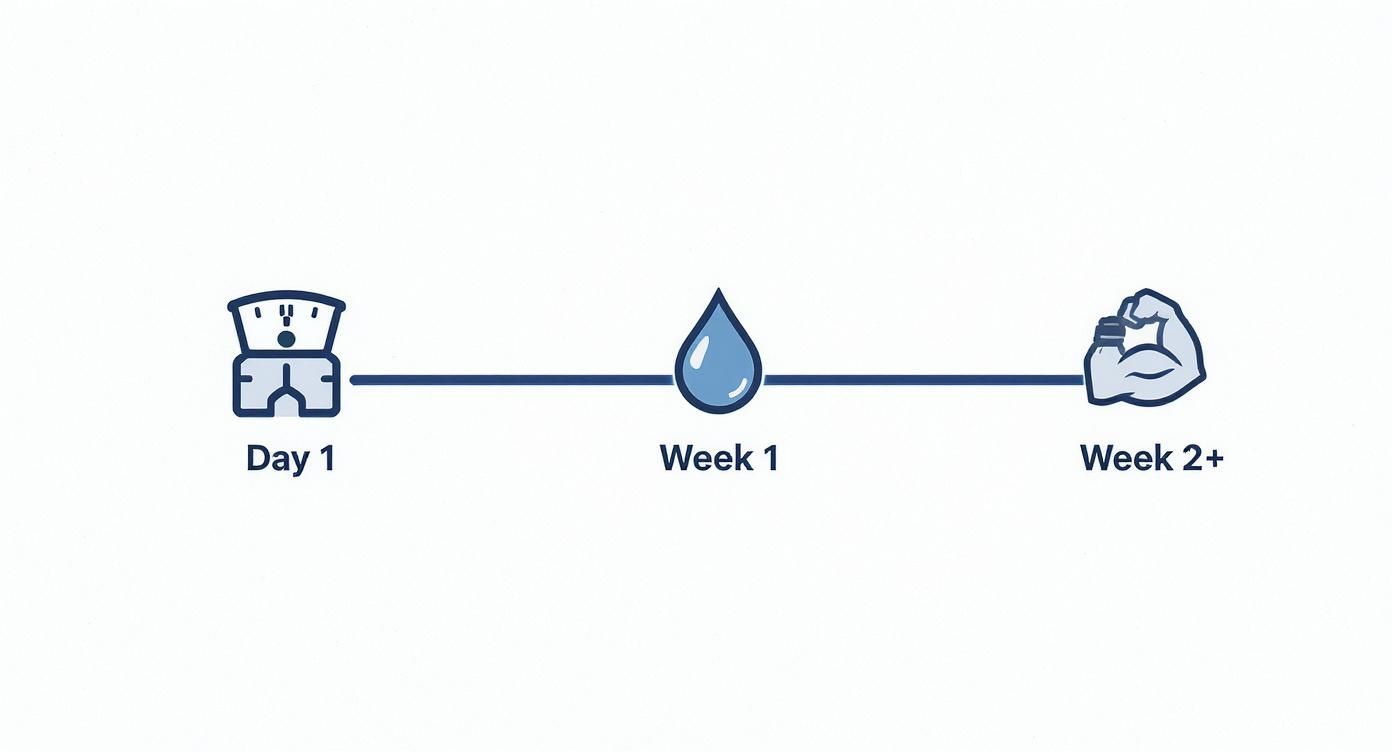
As you can see, the first jump on the scale is fast and it’s just water. The real muscle-building is a slower burn that kicks in once your body adjusts.
The Loading Phase: The First Week
The first 5-7 days are often called the “loading phase.” This is when your muscles soak up creatine like a sponge, pulling water right in along with it. It’s where you’ll see the biggest, fastest change on the scale.
Expect a quick jump of about 1.5 to 3.5 pounds (0.7 to 1.6 kg). It’s critical to remember this is almost all water weight getting stored inside your muscles, not under your skin. This is what gives your muscles that fuller, more “pumped” look.
This initial gain is actually a great sign. It means your muscles are getting fully saturated with creatine, which is exactly what you want for better performance in the gym. Early research backs this up, showing that a loading dose quickly increases body mass, mostly from this initial water retention. You can read more about these early creatine findings were established if you want to dig into the science.
The Maintenance Phase: Week Two and Beyond
After that first week, the rapid water gain pretty much stops. Your muscles are full, and your body weight should level out. From here on out, any weight you gain is the good stuff you’re actually here for—lean muscle.
This is where creatine really starts to work its magic. It gives your muscles the fuel to push harder and lift heavier, and that’s what triggers real muscle growth over time.
Any weight you gain after week one is a direct reflection of your hard work in the gym. This is the sustainable, high-quality weight gain that leads to a stronger, more toned physique.
Building muscle is way slower than retaining water, so don’t get discouraged if the scale moves up more gradually. That slow, steady increase is what real progress looks like. Getting this timeline is key, and if you're curious about the whole process, check out our guide on how long creatine takes to work. Seeing that number climb should feel empowering, not alarming.
Does Creatine Weight Gain Turn into Fat?
Let's cut right to the chase, because this is the question everyone asks: No, creatine does not cause fat gain. Full stop.
The extra weight you see on the scale isn't from adding body fat. It's from water weight and, over time, the hard-earned muscle you’re building in the gym.
Think of it this way: gaining fat happens when you eat more calories than you burn. Creatine itself has no calories. Its entire job is to help your muscles work harder so you can push for that extra rep—the exact opposite of what causes fat gain.
It's completely normal to feel a little alarmed when the scale goes up. But it’s so important to understand what that number actually means. That initial bump is just water being pulled into your muscle cells, which is a great sign. It means the creatine is working, hydrating your muscles and getting them ready to grow.
The Science Separates Muscle from Fat
Don't just take my word for it—the research on this is crystal clear. Study after study shows that while creatine does increase your total body weight, that gain comes from fat-free mass. That’s your muscles and the water they hold, not fat.
One massive review, which looked at data from 143 different studies, found that people taking creatine gained an average of 0.86 kilograms (about 1.9 pounds). More importantly, the researchers confirmed this weight gain was almost entirely lean body mass, with no significant increase in fat.
The takeaway is simple: Creatine is a tool for building a leaner, stronger body. It helps improve your body composition, not add unwanted fat.
This is a key distinction to remember so you can trust the process. Instead of getting spooked by the scale, you can see that initial weight gain as the first sign that you're on your way to building the toned, sculpted body you want.
If you want to move beyond the scale and get the real story, it’s worth exploring various body composition assessment methods that can show you what's really changing.
A Practical Guide to Creatine for Women

Let's get one thing straight: when women hear "weight gain" and creatine in the same sentence, they usually run for the hills. But it's time to bust that myth for good.
The initial weight you might see on the scale isn't fat. It’s not even the kind of puffy, under-the-skin bloat you might be picturing. It's just water being pulled inside your muscle cells, giving them a fuller, firmer, and more toned look. Think sculpted, not soft.
This intramuscular water is your secret weapon for hitting your body goals. It’s what helps you build that lean, strong physique you’ve been working for.
Dosing for Your Goals
You don’t need to follow some complicated, bro-science protocol to get results. While some people swear by a "loading phase" with massive doses, it’s totally unnecessary and often what causes that initial rapid water retention everyone fears.
For most women, a simple, steady approach is far better.
Taking a daily dose of 3-5 grams is the gold standard. It works just as effectively without the sudden spike in water weight because it saturates your muscles more gradually. This makes the whole process feel much smoother and more comfortable.
If you want to choose the right strategy for your goals, here's a quick breakdown of the common approaches:
Creatine Dosing Strategies for Women
This simple guide breaks down the two most common dosing protocols, helping you choose the best one for your goals and comfort level.
| Strategy | Daily Dose | Best For | Key Consideration |
|---|---|---|---|
| Steady Maintenance | 3-5 grams | Women who want consistent results without rapid water retention. Perfect for long-term use. | Slower muscle saturation, but much easier to manage and less likely to cause noticeable initial weight shifts. |
| Loading Phase | 20 grams (split into 4 doses for 5-7 days), then 3-5 grams daily | Women who want to saturate muscles as quickly as possible, often for a specific performance goal. | More likely to cause a quick jump on the scale and potential digestive discomfort. Not necessary for most people. |
Ultimately, the steady maintenance dose is what we recommend for the vast majority of women. It delivers all the benefits without the fuss.
The most important thing isn't how you start—it's that you stay consistent. Taking your 3-5 grams every single day, even on rest days, is what keeps your muscles primed and ready to work.
Navigating the Scale and Your Cycle
The number on the scale is a terrible storyteller, especially for women. Our bodies are constantly changing due to hormonal shifts. It's completely normal for your weight to fluctuate throughout your menstrual cycle from water retention that has absolutely nothing to do with creatine.
So, ditch the daily weigh-ins. They’ll drive you crazy.
Instead, pay attention to the metrics that actually matter:
- Performance: Are you lifting heavier? Getting in one more rep than last week?
- Fit: How are your clothes fitting? Do your jeans feel a little looser around the waist but snugger on your glutes? That's a win.
- Photos: Progress pictures taken weeks or months apart will show you real changes that the scale will never capture.
This gives you a real, holistic view of your progress. For a deeper dive, our complete guide on whether women can take creatine breaks down everything you need to know.
Postpartum and Rebuilding Strength
For new moms, getting back into a fitness routine is a whole different ballgame. Creatine can be an amazing tool during this time, helping you rebuild lost muscle and giving you an energy boost for workouts when you’re running on empty.
The standard 3-5 gram daily dose is a safe and effective place to start. That said, if you're breastfeeding, it’s always smart to have a quick chat with your doctor before adding any new supplement to your routine. It's all about making sure it’s the right call for both you and your baby.
Common Questions About Creatine and Weight Gain
Even after getting the science down, it's totally normal to have a few more questions pop up. Let's walk through the most common ones so you can feel 100% confident about what to expect.
What Happens If I Stop Taking Creatine
Thinking about taking a break? The process just goes in reverse. Your body will naturally clear out the extra creatine from your muscles over about 3-4 weeks.
As that happens, the extra water your muscles were holding onto gets flushed out, too. You might see a small drop on the scale and notice your muscles don't look quite as full, but that’s just the water leaving.
Your strength won't vanish overnight, but you might find it a bit harder to squeeze out that last rep. The good news? The actual muscle you built is yours to keep. You earned that.
Will Creatine Make My Clothes Fit Differently
Yes—and probably in the way you want them to. That initial water gain happens inside the muscle, giving you a fuller, more toned look. Think sculpted, not puffy.
So many women find their clothes actually fit better. Your jeans might get a little looser in the waist but feel snugger on your glutes—the classic sign that you’re building shape and improving your body composition.
The goal here is a leaner, stronger physique. Creatine helps you build dense, shapely muscle, not the kind of bulk that makes your clothes feel tight in all the wrong spots.
Does Creatine Cause Stomach Bloating or Discomfort
This is a huge one, but for most women, the answer is no. The "bloat" from creatine is just water inside your muscles. It’s not the uncomfortable, gassy feeling you get from food.
That said, a few people can experience some mild stomach issues, but it’s almost always avoidable. It usually happens if you:
- Take too much at once: A huge 20-gram loading dose can be harsh. Sticking to a simple 3-5 gram daily scoop is much easier on your system.
- Don't drink enough water: Creatine pulls water into the muscles, so you need to drink enough to support that process. If you don't, you might feel crampy.
- Take it on an empty stomach: Try mixing your creatine into a smoothie or taking it with a meal. This usually solves any potential issues.
Follow those tips, and you’ll likely never have a problem. And while you're thinking about supplements, it's good to know how different ones can affect you. For example, some people find that Omega 3 Fish Oil Supplements May Cause Heartburn.
Can I Lose Weight While Taking Creatine
Absolutely. You just have to separate two different ideas: losing fat versus the number on the scale. Creatine has zero calories and does nothing to stop your body from burning fat.
In fact, it's one of the best tools you can use when you're trying to lose fat.
When you're eating in a calorie deficit, creatine helps you hold onto your strength and muscle. This is so important because it ensures the weight you're losing is actually fat—not the muscle you've worked so hard to build. It’s the key to getting that toned, defined look.
How Can I Manage the Initial Water Weight
If the idea of a quick jump on the scale still bugs you, there’s an easy fix: just skip the loading phase.
Forget taking 20 grams a day for a week. Instead, just start with the standard 3-5 grams per day. Your muscles will still get fully saturated with creatine; it’ll just happen more gradually over three or four weeks.
This slow-and-steady approach avoids any sudden water shifts, making the whole process feel seamless. You get all the benefits for your workouts without any of the scale drama. At the end of the day, consistency is what builds real, lasting results.
Ready to build stronger, sculpted glutes without the guesswork? Bold Buns offers a clean, effective creatine formula designed specifically to help women like you achieve their body goals.