

How to Reduce Water Retention Naturally: Simple Tips
That puffy, swollen feeling isn’t just annoying—it’s a sign your body is holding onto extra fluid. And it’s definitely not fat gain.
To get rid of water retention fast, you have to focus on what’s causing it: things like sodium intake, hydration, and movement. Making a few simple tweaks here can bring quick relief and help you feel way more comfortable.
Why Am I So Puffy? Understanding Water Retention
When your fingers feel tight, your ankles swell, or your stomach feels bloated, you’re experiencing water retention, also known as edema. It’s what happens when excess fluid gets trapped in your body's tissues. This temporary puffiness is usually just your body reacting to some very common triggers.
For so many women, hormones are the main culprit. That pre-period bloat is real, and it happens as your body gets ready for menstruation. The same thing can happen after a long flight or a day stuck at your desk—gravity causes fluid to pool in your legs and ankles.
Common Triggers for Fluid Buildup
Your day-to-day habits are a huge factor here. Think about that weekend you ordered salty takeout—that’s a perfect example of how your diet can throw your fluid balance out of whack. When you eat too much sodium, your body hangs onto water to dilute it, and you end up feeling puffy almost immediately.
The link between salt and water retention is no joke. As soon as your sodium levels go up, your body’s natural defense is to hold onto water to even things out. That’s why a high-salt meal can leave you feeling bloated in a matter of hours.
Other lifestyle habits can add to the problem, too:
- Dehydration: It sounds backward, but if you don’t drink enough water, your body goes into survival mode and holds onto every drop it can.
- High Carb Intake: Eating a lot of refined carbs can spike your insulin levels, which sometimes signals your kidneys to hold onto more sodium—and therefore, more water.
- Certain Medications: Some common prescriptions, like certain blood pressure drugs and anti-inflammatories, can list water retention as a side effect.
Sodium's Role in Water Balance
You really can’t overstate sodium’s impact. Research has shown that adding just 6 grams of salt to your daily diet can mess with your body’s entire water balance system. This is especially true for processed foods like canned soups, frozen dinners, and deli meats, which can pack a huge chunk of your daily sodium limit into one small serving. You can read more about the scientific link between sodium and fluid retention here.
Getting a handle on these triggers is the first step. Keep in mind that this kind of temporary puffiness is different from the fluid retention some supplements can cause. For more on that, check out our guide on whether creatine contributes to weight gain. Once you know what’s causing the discomfort, you can start making changes that actually work.
Smart Food Swaps for Immediate Bloating Relief
When you feel puffy and uncomfortable, you want relief now, not in a few weeks. The good news? A few smart changes to what you eat and drink can make a difference almost immediately. It starts with one simple, if slightly counterintuitive, idea: the hydration paradox.
It sounds backward, but drinking more water is one of the quickest ways to signal your body to let go of excess fluid. When you’re dehydrated, your body panics and holds onto every last drop. Staying hydrated—aiming for at least 1.5 liters a day—tells your kidneys it's safe to flush out extra salt and waste, which is exactly what you want.
Below is a look at some of the most common reasons you might suddenly feel puffy, from what you ate for dinner to that long flight you just took.
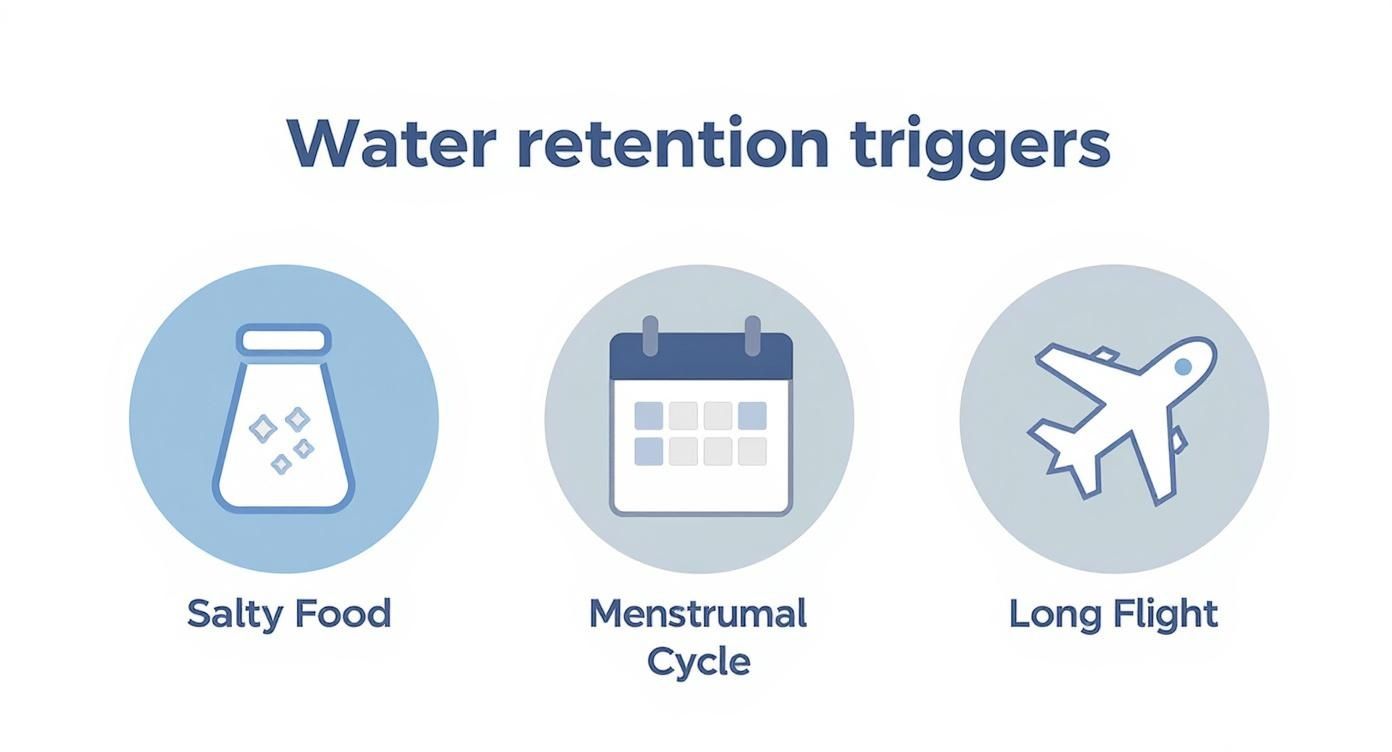
As you can see, salty foods, hormonal shifts, and even travel can all make your body cling to extra water.
Balance Your Electrolytes With Potassium
Once you’re sipping more water, it’s time to look at your electrolyte balance—specifically, the tug-of-war between sodium and potassium. These two minerals are in charge of regulating fluid in your body. Too much sodium makes you hold water; enough potassium helps push that excess sodium out.
Think of it like a see-saw. Your goal is to bring the sodium side down and lift the potassium side up.
This isn’t about a complicated diet. It’s about making simple, smart swaps:
- Instead of salted pretzels or chips, grab a banana or an avocado. Both are loaded with potassium.
- Instead of canned veggies (which are often packed in sodium), go for fresh or frozen spinach and sweet potatoes.
- Instead of deli meats for lunch, try grilled chicken or fish seasoned with herbs instead of salt.
To make this even easier, here’s a quick cheat sheet for swapping high-sodium foods with potassium-rich alternatives.
Potassium-Rich Foods vs High-Sodium Foods
| Choose These Potassium-Rich Foods | Limit These High-Sodium Foods |
|---|---|
| Bananas, avocados, sweet potatoes | Processed snacks (chips, pretzels) |
| Spinach, white beans, lentils | Canned soups and vegetables |
| Salmon, yogurt, coconut water | Deli meats, cured bacon, sausages |
| Oranges, tomatoes, potatoes | Frozen meals, fast food |
Making a few of these trades can have a big impact on how you feel in just a day or two. If you want to dig deeper into other bloat-busters, exploring various natural remedies for bloating can offer even more ideas.
The Supporting Role of Magnesium and B Vitamins
Potassium isn't the only player here. Other micronutrients are key for keeping your fluid balance in check, especially magnesium and Vitamin B6. They’re a well-known duo for easing premenstrual water retention.
Magnesium is a powerhouse. It’s involved in over 300 different processes in the body, including fluid balance. If you’re low on it, your body’s ability to manage water can get thrown off track.
To get more of these on your plate, try adding these foods to your weekly rotation:
- Magnesium-Rich Foods: Leafy greens like spinach, nuts (especially almonds and cashews), seeds, and even dark chocolate.
- Vitamin B6 Sources: Chickpeas, tuna, salmon, and potatoes.
These foods don’t just help with water retention—they also support your energy levels and muscle function, which is a huge plus for your fitness goals. Planning your meals is the best way to stay consistent. For some inspiration, check out our guide to high-protein meal prep ideas that you can easily tweak to include these bloat-fighting ingredients.
Using Movement to Encourage Fluid Drainage
Diet and hydration are huge, but how you move your body is the other half of the battle against that puffy, sluggish feeling. When fluid gets trapped in your tissues, physical activity works like a natural pump, forcing your circulatory and lymphatic systems to get things moving again.
The best part? You don't need to spend hours at the gym to feel a difference.
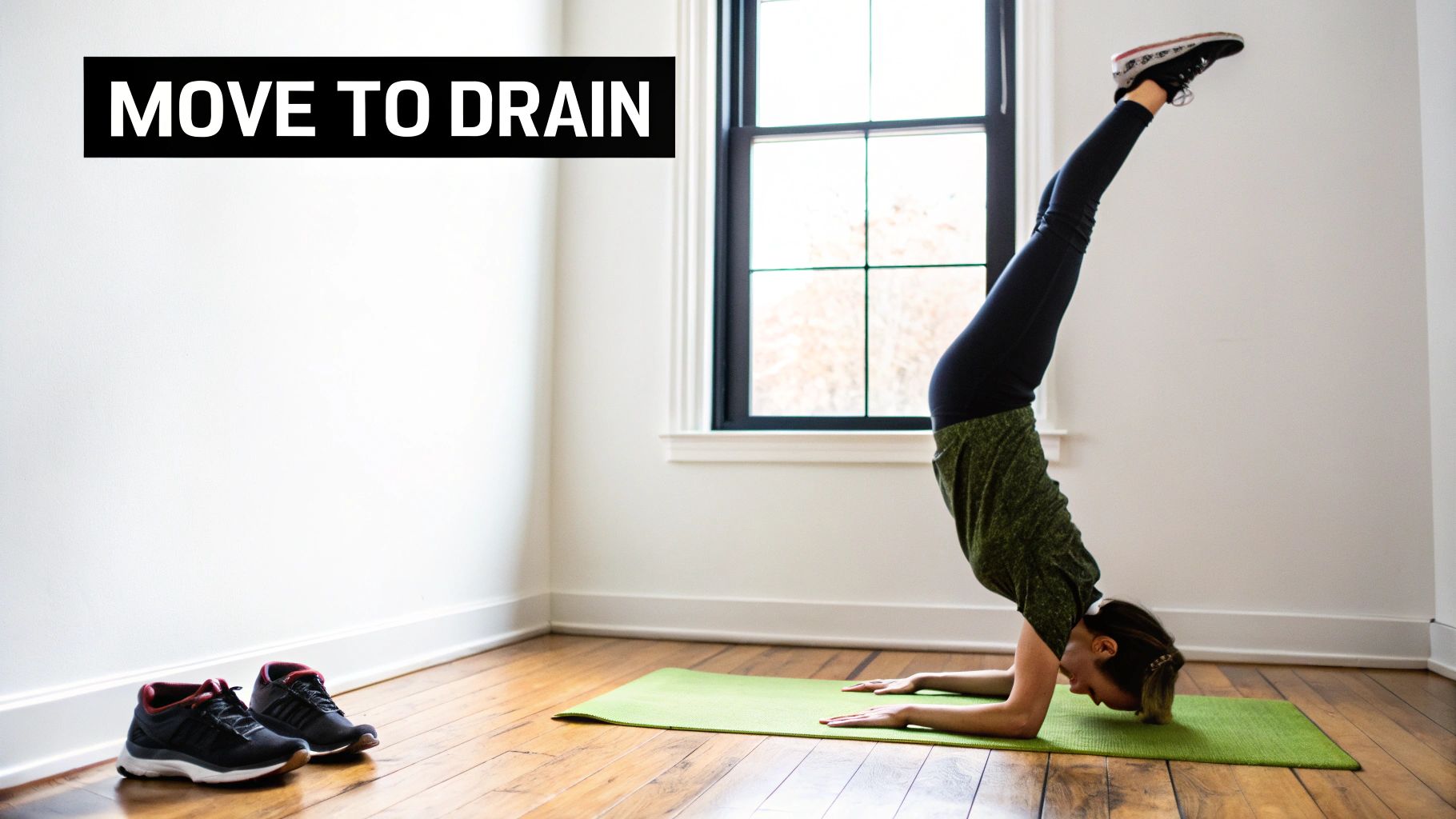
Think of your lymphatic system as your body's internal drainage network. Your circulatory system has the heart to pump blood around, but your lymphatic system doesn't have its own pump. It depends entirely on muscle contractions to move fluid along. This is exactly why a sedentary lifestyle is one of the biggest reasons for swollen ankles and puffy legs.
Gentle Movement for Everyday Relief
Weaving gentle, consistent movement into your day is one of the most effective ways to manage water retention. You're not aiming for a punishing workout—the goal is just to get your muscles firing and your fluids flowing.
Here are a few simple ways to start:
- Brisk Walking: Even a 20-30 minute walk can dramatically improve circulation in your lower body, stopping fluid from pooling in your ankles.
- Gentle Yoga: Poses that involve stretching and mild inversions are fantastic for lymphatic drainage. Twists and flows help massage your internal organs and keep things from getting stagnant.
- Stretching Breaks: If you're stuck at a desk, set a timer to get up every hour. Do a few simple stretches, like calf raises or ankle circles, to keep your circulation from stalling out.
A must-try for swollen feet and ankles is the "Legs Up the Wall" pose (Viparita Karani). Just lie on your back and rest your legs straight up against a wall for 5-10 minutes. Gravity does the work, helping to drain all that excess fluid from your lower body.
Turning Up the Intensity With Cardio
While gentle movement is great for daily maintenance, sometimes you need a bigger push to get things going. Cardio workouts that make you sweat are excellent for shedding excess water weight and sodium fast.
Things like jogging, cycling, or a high-energy dance class get your heart rate up, boost circulation, and force your body to expel water and salt through sweat.
If you're new to working out or just need some structure, our beginner gym workout plan is a great place to start building a routine that works for you. The key is consistency. A few solid cardio sessions a week can make a massive difference in your body's fluid balance.
Supporting Your Body's Drainage System
Beyond your workouts, a few simple habits can give your lymphatic system a helping hand throughout the day. One surprisingly effective technique is dry brushing.
Before you hop in the shower, grab a natural bristle brush and gently sweep your skin in long strokes, always moving toward your heart. This simple ritual is thought to stimulate the lymphatic system, improve circulation, and help your body process trapped fluid more efficiently. It only takes two minutes but can become a powerful part of your daily debloating routine.
Natural Diuretics and Herbal Remedies That Work
Beyond your diet and movement, nature has a few tricks up its sleeve to help your body let go of stubborn fluid. These natural diuretics work by giving your kidneys a gentle nudge to flush out extra water and sodium, offering relief without the harshness of prescriptions.

When you hear "diuretic," you might think of medication, but a lot of common plants have a similar, much milder effect. We're not talking about forcing a result here—it's about working with your system. Adding these into your routine, often as a warm, comforting tea, can support your body's natural balancing act.
Evidence-Backed Herbs for Fluid Relief
While a ton of herbs get hyped up, a few actually have the science to back them up. Dandelion, for example, is more than just a weed you pull from your lawn—it's one of the most well-studied herbal remedies for water retention.
Research on dandelion extract (Taraxacum officinale) shows it can measurably ramp up urine production. One study found it significantly boosted output within just 5 hours of taking it. You can learn more about these herbal diuretic findings for yourself, but the takeaway is clear: this is a reliable option to discuss with your doctor.
A few other promising herbs include:
- Hibiscus: That tart, cranberry-like tea you see everywhere? It has diuretic properties that help your body kick out sodium and water.
- Parsley: This isn't just for garnish. Parsley has compounds that act as a mild diuretic. Try steeping a handful of fresh parsley in hot water for a simple debloating tea.
- Horsetail: Used for centuries in traditional medicine, horsetail is another well-known herb for increasing urine flow and managing fluid buildup.
How to Safely Use Natural Diuretics
The key here is to be smart about it. The goal is gentle support, not an aggressive flush that messes with your electrolyte balance.
My advice? Start slow. Try introducing one herbal tea at a time. A single cup of dandelion or hibiscus tea in the afternoon is a great way to see how your body feels. You can also toss fresh parsley into salads, soups, and smoothies for a more consistent, low-dose approach.
Important Note: Always talk to a healthcare professional before starting any new herb or supplement. This is non-negotiable, especially if you're pregnant, breastfeeding, or on any medications. "Natural" doesn't automatically mean it's safe for your specific situation.
Remember, these are just tools in your toolkit. They work best when they're backing up the real foundational habits: proper hydration, a balanced diet, and regular movement. They're the support crew, helping you feel lighter and more comfortable in your skin.
When Water Retention Signals a Deeper Issue
While most puffiness is temporary and easy to manage, you have to know when your body is signaling something more serious. Think of it like a check engine light—if the swelling is persistent or just feels off, it's time to pay attention.
It’s one thing to feel a little puffy after a salty meal or during your cycle. That kind of bloating is usually generalized and goes away within a day or two. But symptoms that show up suddenly, feel severe, or only affect one part of your body? That’s a red flag.
Recognizing Medical Red Flags
Your body has ways of telling you when simple lifestyle tweaks aren’t cutting it. Learning to spot these signs is critical, as they can point to underlying issues with your heart, kidneys, or liver.
Keep a close eye out for these specific symptoms:
- Sudden and Severe Swelling: If you blow up like a balloon overnight, that’s not normal.
- Asymmetrical Swelling: Fluid pooling in just one leg or arm is a major warning sign. This can point to a localized problem like a blood clot and needs urgent medical evaluation.
- Shortness of Breath: If swelling comes with difficulty breathing—especially when you lie down—it could mean fluid is building up around your lungs, often linked to heart conditions.
- Chest Pain or Pressure: This is never something to ignore. It warrants an immediate trip to the emergency room.
Understanding Pitting Edema
One of the most telling signs a doctor looks for is something called pitting edema. This is what happens when you press a finger into a swollen area, like your shin or ankle, and the indent stays there for several seconds after you let go.
Pitting edema is a classic indicator that your body is holding onto a significant amount of excess fluid. It strongly suggests an underlying medical issue is messing with your body’s ability to regulate its fluid balance.
This isn't the same soft puffiness you might get after a long flight. It’s a distinct sign that a doctor needs to run some tests to see what’s going on with your vital organs. For a closer look at your body’s internal chemistry, including kidney function and electrolytes, understanding your Comprehensive Metabolic Panel (CMP) results can be incredibly insightful.
Never hesitate to get a professional medical opinion if you feel something isn't right. Learning how to manage water retention is empowering, but knowing when to call a doctor is the most important skill you can have.
Your Questions About Bloating, Answered
Feeling puffy and confused is a frustrating combo. Let's clear a few things up and get you back to feeling like yourself.
How Long Does It Take to Get Rid of Water Retention?
It really depends on what’s causing it.
If you had a super salty dinner, you can usually flush it out and feel relief within 24 to 48 hours. The trick is to drink plenty of water and load up on potassium-rich foods to help your body find its balance again.
But if it’s hormonal—like that pre-period puffiness—it usually goes away on its own once your cycle starts. For longer-term fluid buildup from being too sedentary, you’ll likely need a week or two of consistent movement and better habits to see a real difference.
Can Stress Cause Water Retention?
Absolutely. When you're chronically stressed, your body pumps out the stress hormone cortisol.
High cortisol messes with the hormone that controls your body’s water balance (ADH), telling it to hold onto every last drop.
It's your body's ancient fight-or-flight system kicking in. It thinks you're in danger and starts hoarding resources—like water—to prepare for a threat that isn't really there. This is why managing stress with yoga, meditation, or even a quick walk is so powerful.
Why Do I Wake Up With a Puffy Face?
Waking up looking like a marshmallow is usually just a sign of fluid pooling in your face while you were lying flat all night. A few things make it worse:
- A Salty Dinner: The number one culprit. All that sodium makes your body cling to water.
- Dehydration: Seems backward, right? But if you don't drink enough water, your body holds onto what it has.
- Sleeping Position: Lying flat makes it easy for fluid to settle in your face.
The easy fix? Prop your head up with an extra pillow to let gravity do its thing. Splashing your face with cold water or a quick facial massage in the morning will also get the circulation going and speed things up.
Is It Water Weight or Fat?
It’s easy to mix these up, but they couldn't be more different.
Water weight shows up fast and leaves just as quickly. You can "gain" a few pounds in a single day and lose them by the next. It feels soft and puffy, especially in your hands, feet, ankles, and belly.
Fat gain is a much slower burn. It happens over weeks or months of consistently eating more calories than your body uses. It’s a real change in your body composition, not a number that jumps around on the scale daily. If your weight is yo-yoing from one day to the next, it's almost definitely water.
Ready to stop guessing and start sculpting? Bold Buns creates science-backed supplements designed for women who are serious about their fitness goals. Our clean creatine formula helps you build strength and tone your body without the unnecessary additives. Level up your training and build the confidence you deserve. Discover the difference at https://tryboldbuns.com.